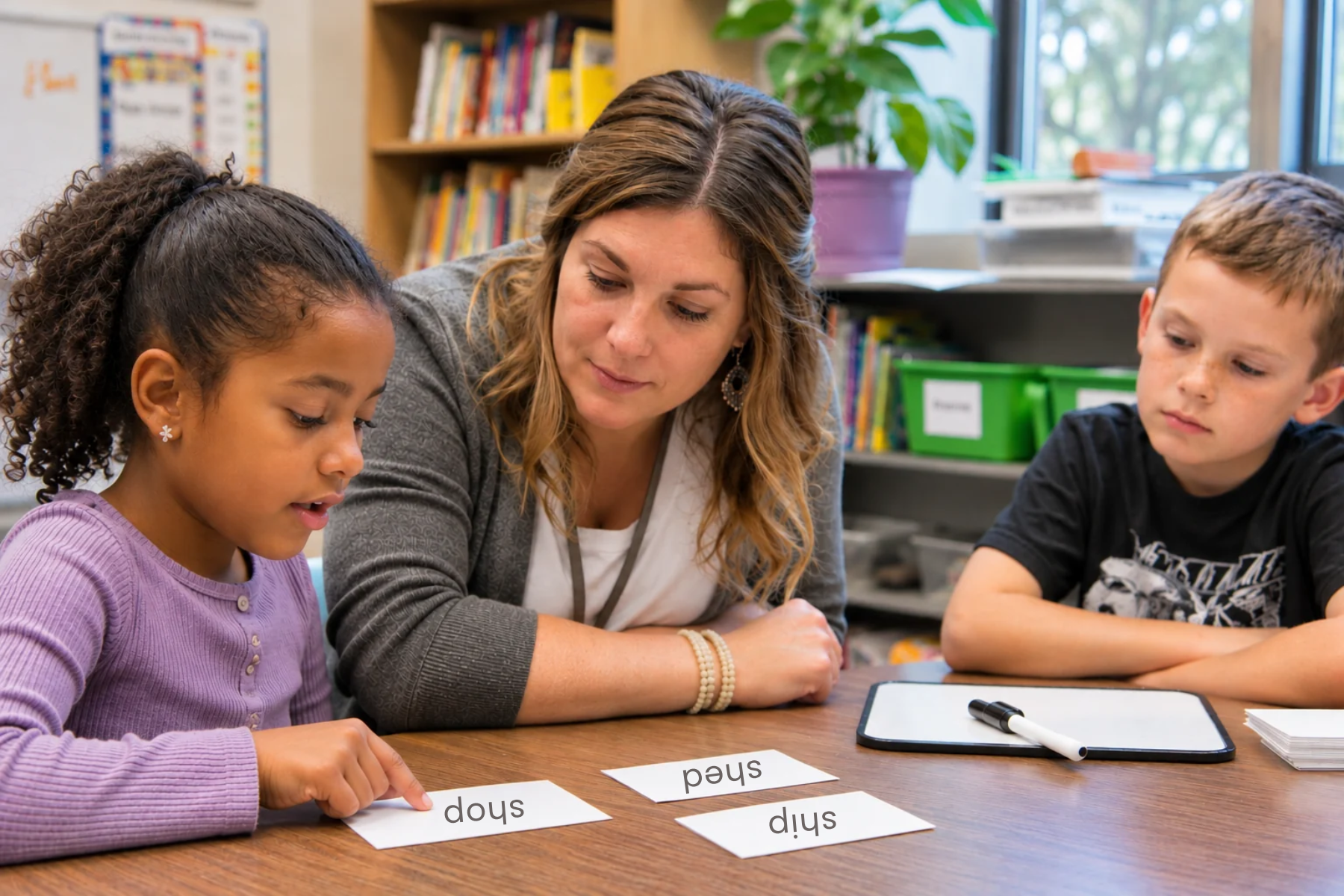
You've been providing phonics intervention, following your lessons, and giving students opportunities to practice. But some students are still making the same decoding errors. Skills that seemed secure last week are suddenly difficult again, and progress isn't happening as quickly as you expected.
At some point, you start wondering whether your phonics intervention program is actually working.
This is often where teachers get stuck. Do you need to change programs, spend more time on the same skill, or try something different?
Sometimes students do need a different intervention approach. Other times, the instruction, practice, or skills being targeted may not quite match what they need.
Before changing programs, I would look at five important questions. They can help you recognize where students may be getting stuck and what deserves closer attention before deciding what to change.
Before Changing Programs, Look at What May Be Stalling Progress
When students aren't making progress in phonics intervention, it's tempting to focus on the program itself.
But even a well-designed intervention may not produce the expected results if students are working on skills they aren't ready for, receiving instruction that doesn't match their needs, or having too few opportunities to apply what they've learned.
Instructional time, consistency, and the way we measure progress matter, too.
An intervention isn't just the program we're using. It's also what we're teaching, how students are practicing, and how we're responding to their progress.
The National Center on Improving Literacy's guidance on intensifying reading instruction emphasizes looking at both what students are taught and how instruction is delivered. It also highlights the importance of assessment information when deciding whether additional support is needed.
That doesn't mean changing programs is never necessary. It means there are several things worth examining before making that decision.
1. Are We Teaching the Right Phonics Skill?
One of the first things I would examine is whether the phonics skill being taught matches what students need.
A student can participate in a lesson, complete the activities, and appear to understand a new phonics pattern without being able to apply it independently.
For example, imagine a group working on vowel-consonant-e (VCe) words such as make, hope, and time.
During instruction, one student needs considerable support to read these words. When the teacher looks more closely, she notices that the student is also inconsistent when reading short-vowel CVC words such as mat, hop, and sit.
The difficulty may not be limited to the new VCe pattern. The student may still have gaps in the short-vowel decoding skills that support this instruction.
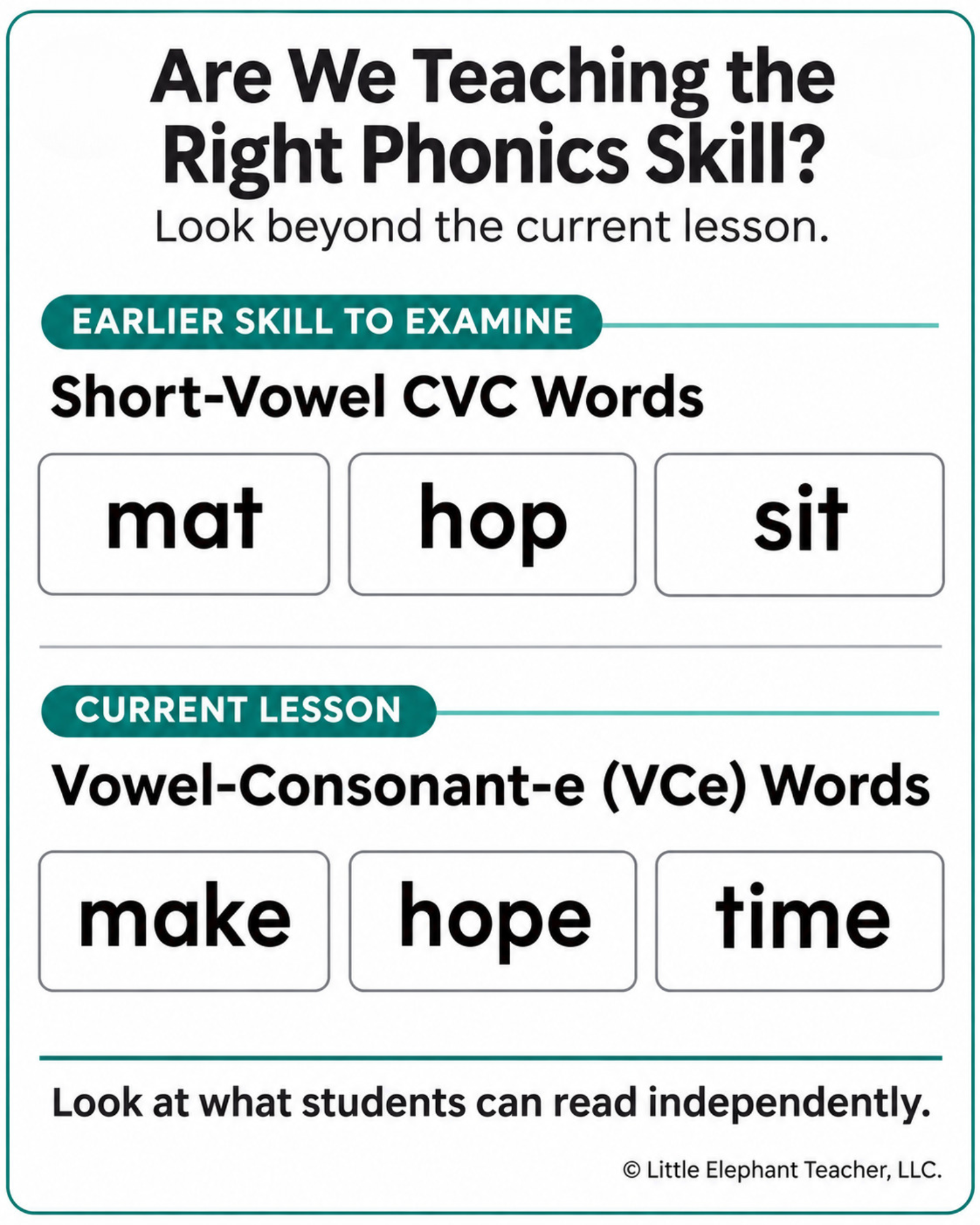
When a student struggles with a new phonics pattern, earlier decoding skills may deserve another look.
This is why I pay attention to what students can do independently, not just which lesson they're completing.
Before moving forward, I want to know whether students can accurately apply the skills that the current lesson builds upon.
That doesn't mean every mistake requires going back several lessons. An occasional decoding error is different from a repeated pattern of difficulty.
But when a student continues to struggle, it's worth examining the underlying phonics skills rather than simply providing more practice with the current lesson.
For more on identifying instructional needs, read How to Know What Phonics Skill to Teach Next Using Assessment Data.
2. Do the Students in This Group Actually Need the Same Instruction?
Another reason phonics intervention may stall is that students within the same group don't always need the same instruction.
This can be especially challenging when intervention groups are formed using reading levels, overall assessment scores, or grade-level expectations.
Two students may have similar reading scores but struggle with different phonics skills.
Imagine three students receiving instruction on consonant digraphs.
Two students can read familiar sh words but struggle when that pattern appears in unfamiliar words. The third student is still having difficulty blending simple CVC words.
All three students need reading support, but they may not benefit equally from the same lesson.
The teacher may find herself moving too slowly for some students while providing extensive support to others.
When students have different foundational needs, it becomes harder to keep group instruction focused on a skill everyone needs to learn.
The What Works Clearinghouse practice guide on reading intervention recommends intensive, systematic small-group instruction that addresses students' foundational reading needs.
Here is what I would look for: Are students making similar types of errors? Are they working toward the same instructional goal? Can they all participate meaningfully in the lesson?
If the answers vary considerably, the grouping arrangement may need another look.
I explain this more in How to Group Students for Phonics Intervention: Why Skill Needs Matter More Than Reading Levels.
Sometimes the first thing to reconsider isn't the program. It's whether the students receiving instruction together actually have similar skill needs.
3. Are Our Lessons Explicit, Focused, and Consistent Enough?
Even when we're teaching the appropriate phonics skill, it's important to look at how instruction is actually happening.
A lesson can be well planned, but that doesn't always mean students are receiving enough opportunities to learn and practice the targeted skill.
Think about a typical 25-minute intervention block.
By the time students arrive, materials are ready, and everyone settles in, several minutes may already be gone. On some days, intervention is shortened by schedule changes or interruptions.
During the lesson, the teacher models several words, students respond together, and the group completes a practice activity.
Everything may appear to be going smoothly.
But how many opportunities did each student have to read a word independently?
How often did the teacher hear an individual response and provide feedback?
Students need opportunities to actively apply what we're teaching, not just watch us demonstrate it.
When I think about explicit phonics instruction, I look for clear modeling, focused practice, frequent student responses, and corrective feedback when errors occur.
For example, if a student repeatedly reads ship as sip, simply telling the student the correct word may not address the confusion.
The student needs feedback that directs attention to the printed letters and the sound-spelling relationship being taught.
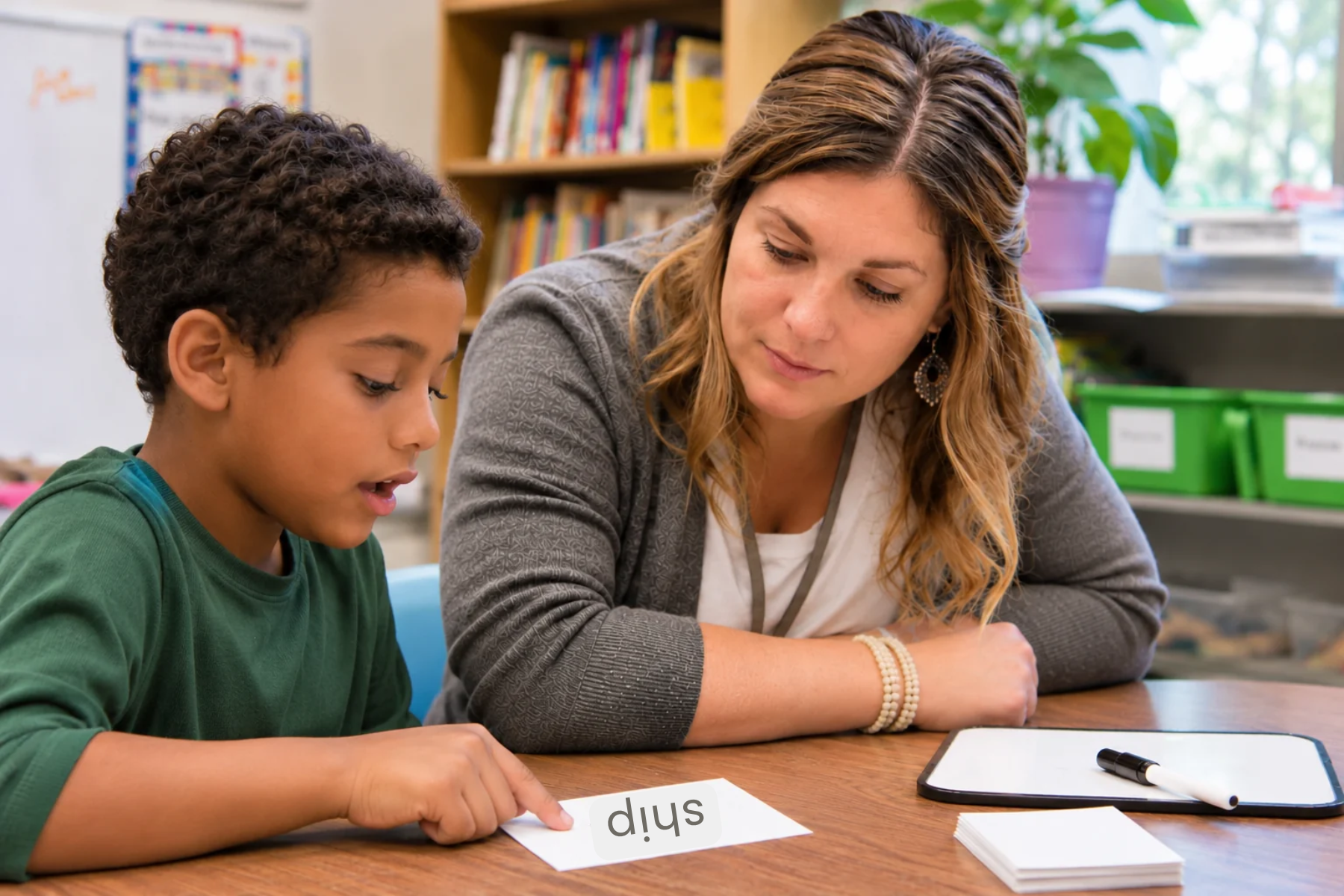
Listening to individual student responses helps teachers recognize decoding errors and provide feedback focused on print.
I explain this in more detail in What to Say When a Student Reads a Word Incorrectly: Corrective Feedback for Decoding Errors.
Consistency matters, too. Students need access to the instruction they're supposed to receive, with enough meaningful opportunities to respond and learn from feedback.
Before deciding the program isn't working, I would examine what students are actually experiencing during instruction.
4. Are Students Practicing the Skill in Reading, Spelling, and Connected Text?
This is an area I pay close attention to during phonics intervention.
Students may be successful with a phonics pattern during one activity but struggle to use that same pattern in another.
For example, imagine a student practicing the consonant digraph sh.
During word-list practice, the student reads ship and shop correctly.
But when asked to spell ship, the student writes sip.
Later, while reading a decodable passage, the student has difficulty reading unfamiliar words containing the same digraph.
The student was successful during part of the lesson, but that doesn't necessarily mean the phonics skill is secure.
Reading a familiar word correctly is not always the same as independently applying the phonics pattern.
This is why I want students to have opportunities to work with a target phonics skill in several meaningful ways.
When students decode unfamiliar words, I can listen for how they apply sound-spelling relationships.
When they spell, I can see how they connect the sounds they hear to the letters they write.
And when they read appropriately controlled connected text, I can observe how they apply those skills while reading sentences and making meaning.
These activities provide different opportunities to strengthen and observe students' phonics knowledge.
They also help us recognize when a skill that appears secure during one activity isn't yet being applied consistently.
The Institute of Education Sciences' foundational reading practice guide recommends teaching students to decode and write words and providing regular connected-text reading to support accuracy, fluency, and comprehension.
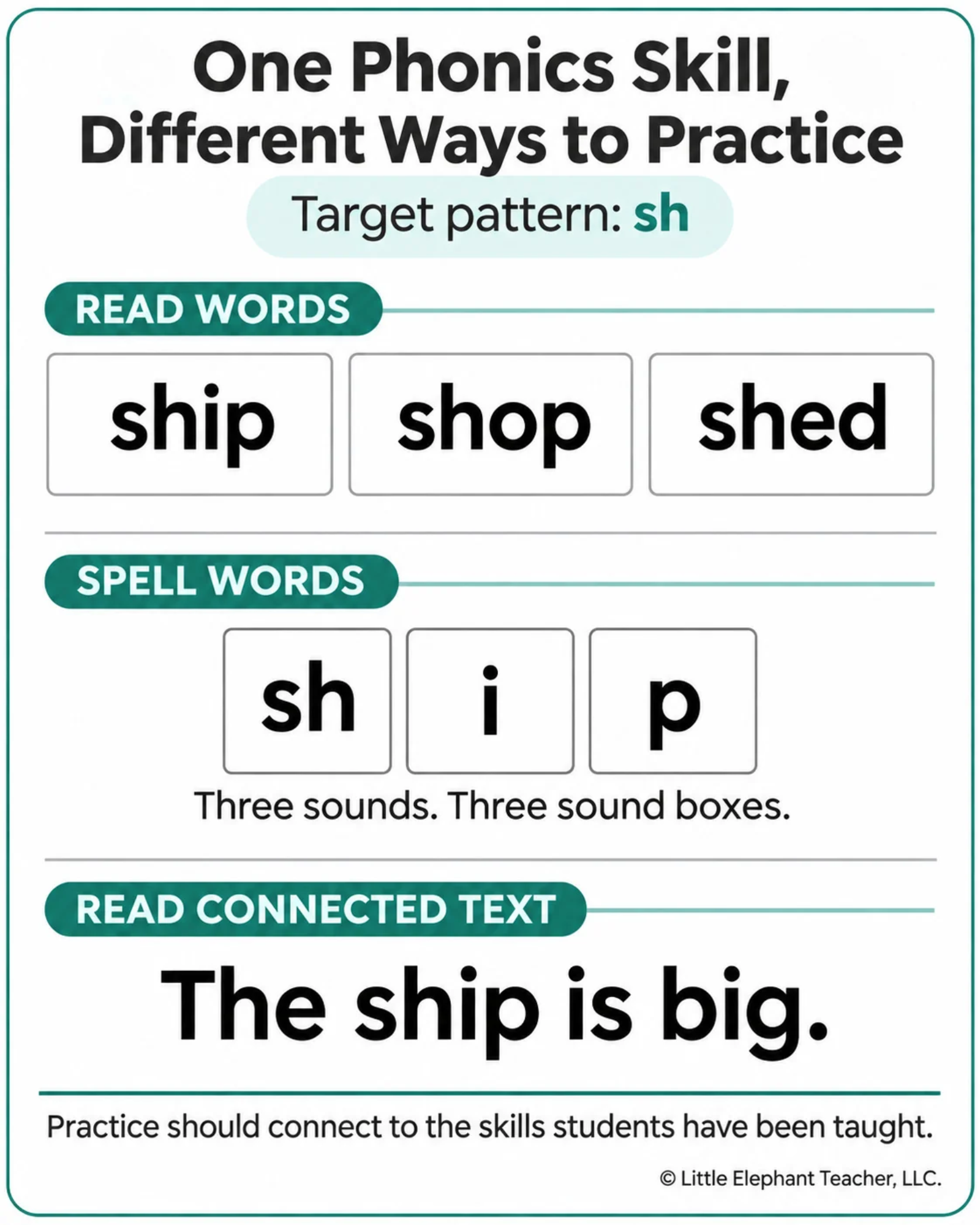
Decoding, spelling, and connected-text reading give students different opportunities to apply the phonics skills they are learning.
Free Phonics Word Lists for Targeted Practice
If you're looking for a simple way to provide additional word-level practice, my Free Phonics Word Lists include real and nonsense words organized by phonics patterns.
You can use them during blending and decoding practice to give students more opportunities to apply the sound-spelling relationships they're learning.
Get the Free Phonics Word Lists
Word lists are one useful part of phonics instruction. Students also need opportunities to connect that learning to spelling and connected reading.
If you've noticed that students can read a word list accurately but struggle when those same patterns appear in sentences, read Why Can My Student Read Word Lists but Struggle With Decodable Text?.
Once you know the skill students need, it helps to have instruction and practice that stay focused on that same target. That connection becomes especially important when you're planning for multiple intervention groups.
5. Are We Measuring the Progress We Actually Want to See?
When phonics intervention doesn't seem to be working, I also want to look at how we're measuring student progress.
Sometimes students appear successful during daily lessons, but we don't have enough information to know whether they're independently applying what they've learned.
For example, a student might consistently earn high scores on familiar word-reading activities.
That's encouraging, but it doesn't necessarily tell us whether the student can read unfamiliar words containing the same phonics pattern.
It also doesn't tell us whether the student's broader reading skills are improving.
There is a difference between completing a familiar activity successfully and demonstrating independent growth in a reading skill.
This is one reason progress monitoring matters.
Skill-specific information can help us understand how students are responding to particular phonics targets. Appropriate broader reading measures help us evaluate whether students are progressing toward larger reading goals.
Both types of information can be important.
For example, I may want to know whether a student can accurately decode unfamiliar words containing a previously taught pattern. I also need to consider whether the student's overall reading progress is moving in the right direction.
A student can improve on one phonics skill while still needing significant support in other areas.
The National Center on Intensive Intervention's progress-monitoring guidance explains how educators can use progress data to evaluate students' responses to intervention and determine whether instructional adjustments are needed.
Before concluding that an intervention isn't working, I would ask:
Does the information I'm collecting actually show whether students are making progress toward the skills and reading goals I'm targeting?
When we don't have enough relevant information, it becomes difficult to determine what should happen next.
For more on using assessment information to guide instruction, read How to Use Phonics Data to Drive Instruction (Not Just Grouping Students).
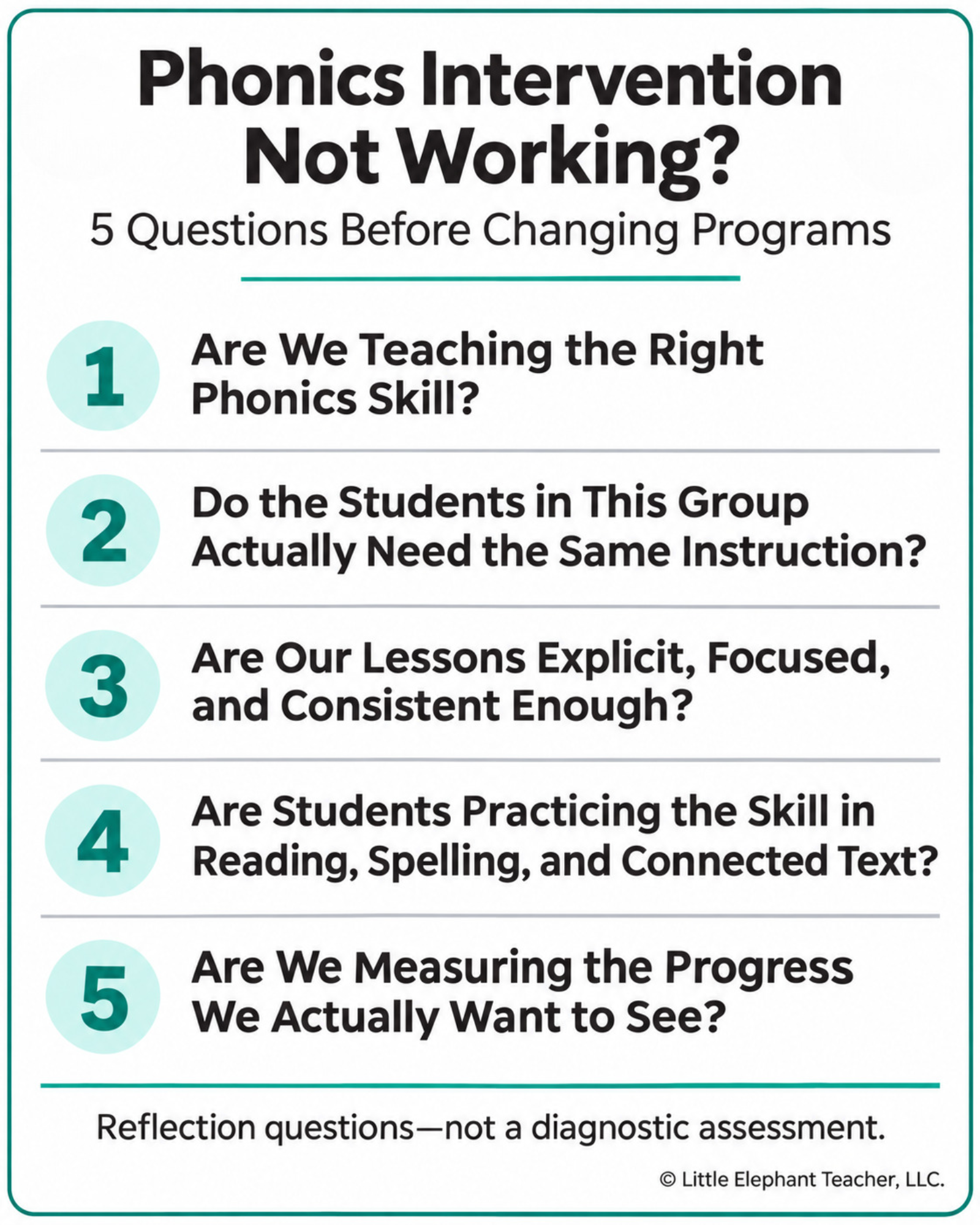
Before changing phonics programs, consider these five areas to help identify what deserves closer attention.
When Might Changing Phonics Programs Be the Right Decision?
Sometimes, after looking closely at instruction and student progress, it becomes clear that students need something different.
A student may need more intensive instruction, more individualized support, or materials that better address specific foundational gaps.
The current program may not provide the instruction or practice needed for that student. And when progress remains inadequate despite appropriately implemented intervention, that concern deserves timely attention.
Changing the entire program isn't always the only option.
Sometimes teachers can adjust instructional intensity, provide more targeted practice, or make changes within the existing intervention.
Other situations may call for a different approach altogether.
These decisions should be informed by student performance, the instruction already provided, and collaboration with the appropriate school intervention team.
It's also important to remember that not every reading difficulty is explained by phonics alone. Some students need additional support in areas such as language comprehension or fluency.
The goal isn't to keep using the same program no matter what. It's to understand what students need and provide instruction that addresses those needs.
Choose the Phonics Support That Fits Your Classroom
Once you've identified the phonics skills students need, the next challenge is having appropriate instruction and practice materials available.
Teachers shouldn't have to spend hours searching for separate activities every time a student needs additional instruction on a particular skill.
The best materials depend on the intervention approach you're using and what your students need.
I Need a Complete, Skill-by-Skill Phonics Intervention
If you need a structured approach to teaching specific foundational phonics skills, my Phonics Intervention Bundle provides explicit, skill-by-skill lessons with coordinated student practice.
The materials include decoding and blending, spelling, phoneme-grapheme mapping, connected text, and fluency practice.
Instead of gathering unrelated activities, you have instructional components organized around the skills your students need to learn.
This can be especially helpful when you're providing intervention for students with different foundational reading needs.
View the Phonics Intervention Bundle
I Use UFLI Foundations and Need More Aligned Practice
If your school uses UFLI Foundations, you may already have an established instructional sequence but need additional opportunities for students to practice and apply the skills being taught.
My UFLI-Aligned ENDLESS Bundle provides lesson-aligned student workbook pages, decodable readers and passages, comprehension questions, progress-monitoring assessments, irregular-word practice, word lists, and additional practice materials.
These resources are designed to supplement instruction following the UFLI Foundations scope and sequence.
They help keep additional practice organized around the skills students are learning without requiring teachers to gather separate resources for every lesson.
The bundle is independently created and is not affiliated with or endorsed by UFLI Foundations.
Frequently Asked Questions About Phonics Intervention
How Do I Know if My Phonics Intervention Is Working?
Look for evidence that students are becoming more accurate and independent with the skills they're learning. This may include improvement in decoding unfamiliar words, spelling accuracy, and applying taught phonics patterns in connected reading. Appropriate progress-monitoring measures can also help you evaluate whether students are making meaningful progress toward broader reading goals.
How Long Should I Try a Phonics Intervention Before Making Changes?
There isn't one timeline that applies to every student or intervention. The frequency and consistency of instruction, the student's needs, and the available progress-monitoring information all matter. Follow your school's intervention procedures, review student progress regularly, and make timely adjustments when the evidence shows that current instruction isn't sufficient.
What Should I Do if a Student Still Isn't Making Progress With Explicit Phonics Instruction?
Review whether instruction matches the student's needs and whether the student is receiving appropriate instructional support. Look at the available assessment and progress-monitoring information. Some students need more intensive or individualized instruction, additional assessment, or support in other areas of reading. Collaborate with your school's reading intervention or MTSS team when appropriate.
Can I Use UFLI Foundations With Students Who Need Additional Reading Intervention?
UFLI Foundations can be part of reading intervention when its instructional approach and sequence match the student's needs. However, some students may require additional practice, greater instructional intensity, or more individualized support. The important consideration is whether students are receiving appropriate instruction and making adequate progress—not simply whether a particular program is being used.

About the Author
Andrea Russman is a Title I reading teacher and the founder of Little Elephant Teacher®. As a classroom educator and curriculum developer, she creates structured phonics intervention lessons, UFLI-aligned practice materials, and progress-monitoring resources to help teachers provide targeted foundational reading instruction.
Before You Change Programs, Start With What Your Students Need
When phonics intervention isn't producing the progress you expected, the next step isn't always starting over with a different program.
Look closely at what students need, what they're being taught, and whether they're making meaningful progress.
Sometimes a small instructional adjustment is appropriate. Other times, students need more intensive support or a different approach.
Once you understand what's missing, you can make a more informed decision about what to teach and what materials will support that instruction.
If you need a complete intervention approach, explore the Phonics Intervention Bundle.
Already using UFLI Foundations? Explore the UFLI-Aligned ENDLESS Bundle for additional lesson-aligned practice and progress-monitoring resources.