Teachers collect a lot of phonics data.
Screeners. Checklists. Progress monitoring. Notes scribbled during small groups.
But one of the most common frustrations in reading intervention phonics sounds like this:
“I know who’s struggling… but I’m not sure what to actually teach next.”
Too often, phonics data gets used to sort students into groups, not to guide instruction. And when data only leads to grouping, it can leave teachers feeling uncertain, overwhelmed, or stuck reteaching everything “just in case.”
Phonics data was never meant to do that.
Its real purpose is to drive instruction — to help you decide what to teach, when to teach it, and why. When data leads directly to instructional decisions, confidence follows.
But that only happens when your assessment is identifying the right starting point. If you're unsure whether your phonics assessment is uncovering the true skill gap, this guide on Diagnostic Phonics Assessments: Getting to the Root of the Problem explains how to pinpoint the first missing skill before planning instruction.

Why Using Phonics Data Only for Grouping Hurts Instruction
Grouping is not the problem.
Stopping at grouping is.
A common pattern looks like this:
Assess students
Sort them into groups
Teach the same lesson to everyone in the group
The issue is that groups hide individual gaps. Two students can score similarly but need very different instruction.
When phonics assessment data is only used for placement, it answers who needs help — but not what kind of help or where to begin.
What to Listen For
If data is being underused, you may hear:
“They’re all low, so I’ll just reteach everything.”
“This group just needs more practice.”
“They’re not ready to move on yet.” (without naming a skill)
Quick Check
Ask yourself:
Can I name the specific phonics skill each student in this group needs next?
If not, the data hasn’t finished its job yet.
How to Analyze Phonics Assessment Data to Identify Reading Skill Gaps
To use phonics data to drive instruction, the focus has to shift from scores to patterns.
Phonics assessment data becomes powerful when it helps answer three instructional questions:
What skill is secure?
What skill is unstable?
What is the first missing skill?
That third question matters most. Effective intervention doesn’t start where the student struggles most — it starts where instruction will actually stick.
And once a skill becomes secure, knowing when to move forward matters just as much. If you're unsure how to determine whether a student is truly ready to advance in phonics skills, this guide on How to Determine When a Student Is Ready to Move Forward in Phonics Skills explains exactly what to look for before progressing instruction.
What to Listen For
When analyzing phonics data, look for patterns such as:
Consistent vowel confusion
Difficulty explaining how a word was decoded
Spelling errors that mirror reading errors
These patterns tell you why the error is happening, not just that it happened.
Quick Check
Have a student:
Read a word
Explain how they read it
Spell the same word
If reading and spelling don’t align, you’ve found an instructional clue.
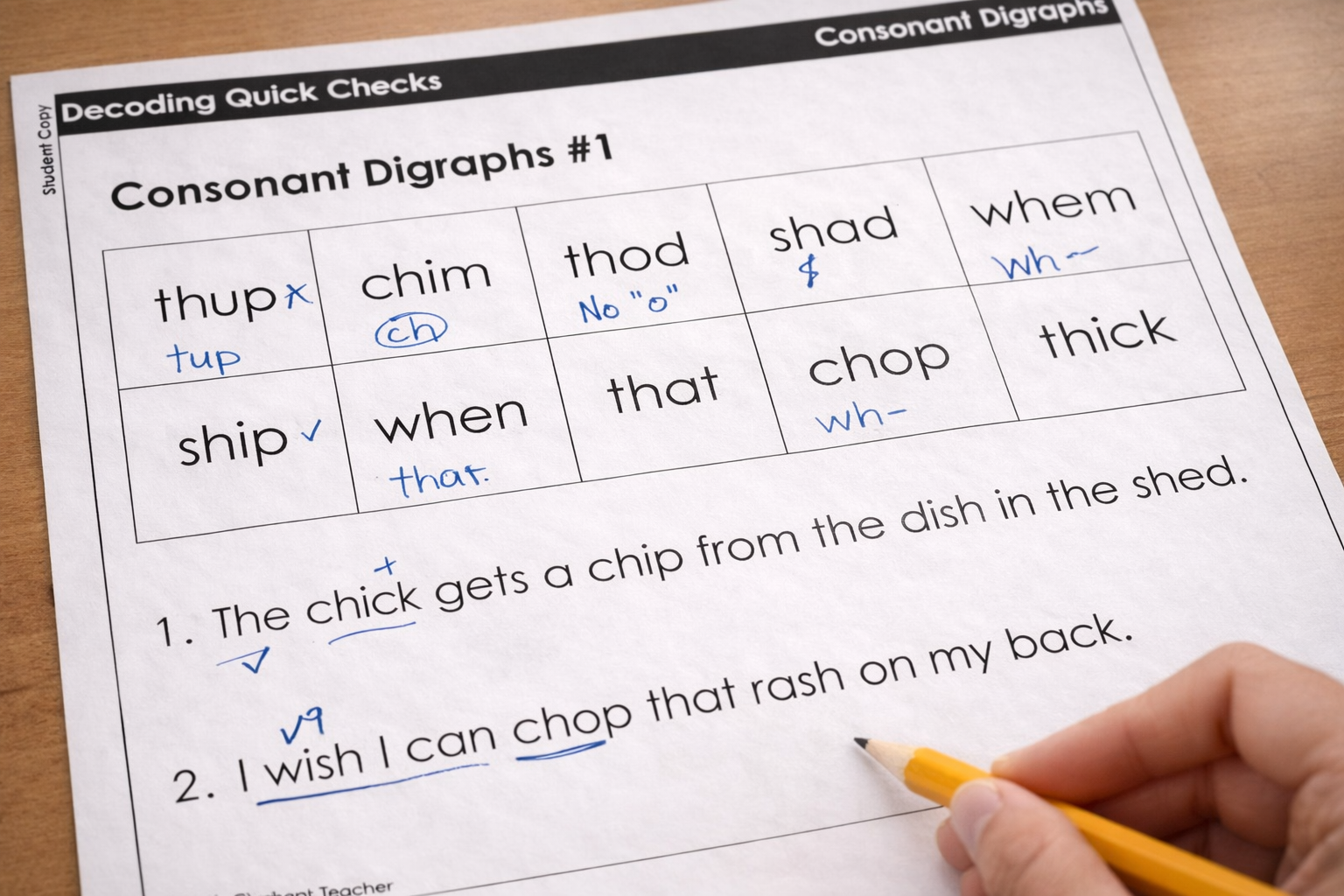
How to Turn Phonics Assessment Data into Targeted Instruction
Once patterns are clear, the next step is turning data into action.
A simple data-driven phonics instruction flow helps:
Identify the error pattern
Determine the underlying skill gap
Choose instruction that directly targets that gap
Decide what not to teach yet
This step is critical. Teaching everything “just in case” often slows progress and increases frustration — for both students and teachers.
What to Listen For
When instruction matches the data, you’ll often hear:
Less guessing
Faster response time
Increased self-correction
Quick Check
Ask:
If I teach this skill for three sessions, what specific change should I expect to see or hear?
If you can’t answer that, the instruction may not be specific enough.
How Phonics Progress Monitoring Confirms Your Instruction Is Working
Phonics progress monitoring is often misunderstood.
It’s not about generating more data — it’s about confirming instructional impact.
Effective phonics progress monitoring is:
Short
Skill-specific
Frequent enough to guide decisions
The goal is to check whether the instruction you chose is actually addressing the skill gap you identified.
If you need structured, skill-specific assessment tools, this post on 12 Phonics Assessments that are Quick and Effective for ALL Phonics Skills outlines practical options you can use immediately during intervention and progress monitoring.
What to Listen For
During progress monitoring, listen for:
Increased accuracy before speed
Transfer to unfamiliar words
Greater confidence and independence
Quick Check
Reassess the same skill, not a harder one.
Progress monitoring should confirm growth, not test endurance.
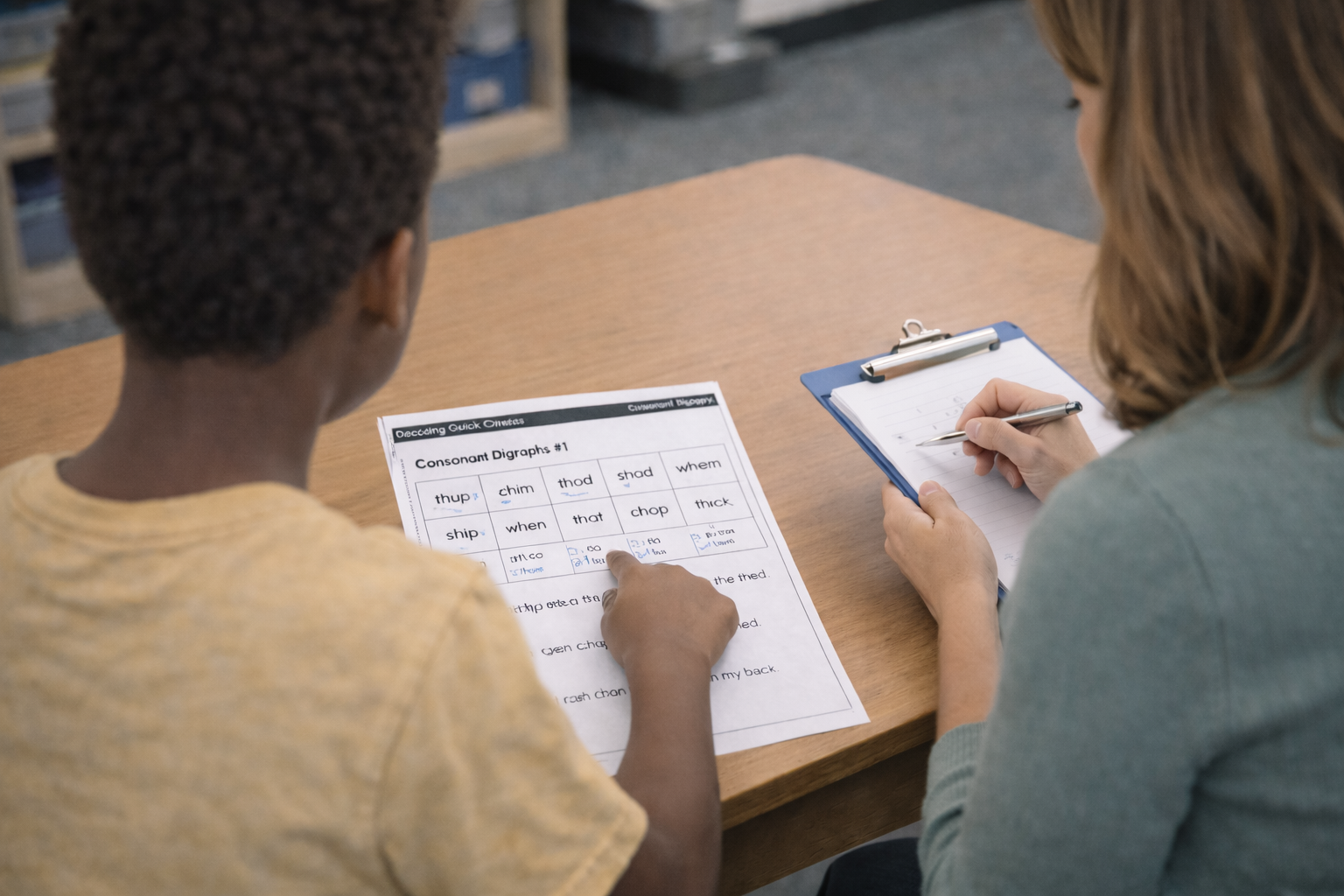
Still Unsure What Growth Actually Means?
If you’re collecting phonics data but not fully confident in what it’s telling you, my Phonics Progress Monitoring Assessments provide structured, skill-based checks so you can clearly see mastery — and know exactly what to teach next.
👉 See the Progress Monitoring Assessments
A Quick Word About Progress Monitoring Tools
When phonics progress monitoring tools are aligned to instruction, phonics data becomes much easier to interpret. Instead of wondering whether growth “counts,” you can clearly see whether instruction is working — and adjust quickly when it’s not.
My Phonics Progress Monitoring Assessments were created to align directly with structured phonics instruction, making it easier to confirm mastery and identify next steps.
This is also why strong intervention instruction matters. In 12 Powerful Lessons for Phonics that You Need to Know, each lesson is designed to address specific skill gaps in a structured, systematic way. When instruction is intentional and aligned to assessment, progress monitoring becomes clearer — because you know exactly what you’re measuring and why.
How Using Phonics Data to Drive Instruction Builds Teacher Confidence
Data shouldn’t create doubt.
But for many teachers, it does — especially when there’s pressure to move students forward without clear signals.
When phonics data is interpreted correctly:
Instruction becomes more precise
Decisions feel defensible
Confidence increases
What to Listen For
Teacher clarity sounds like:
“I know exactly what we’re working on.”
“I know what I’m listening for.”
“I know how I’ll check progress.”
Quick Check
Ask yourself:
Could I confidently explain this instructional decision to a colleague or administrator?
If yes, your data is doing its job.
Final Takeaway
Phonics data isn’t about grouping students — it’s about guiding instruction.
When teachers know how to use phonics data to drive instruction, grouping becomes secondary and confidence becomes primary. Clear data leads to clear teaching, and clear teaching leads to stronger outcomes.
Ready to Use Phonics Data with Confidence?
Many teachers were never taught how to interpret phonics assessment data — only how to move through a scope and sequence.
If you’re ready for phonics data to feel clear instead of confusing, the Phonics Assessment Course was created to bridge that gap.
Inside the course, you’ll learn:
What phonics data actually matters
How to analyze error patterns
How to determine the right instructional starting point
How to stop guessing and teach with confidence
If you want phonics data to clearly tell you what to teach next — not just who to group — this course is designed to support that work.
Frequently Asked Questions
What phonics data matters most for instruction?
Data that shows patterns of errors in decoding and spelling is most useful for guiding instruction.
How often should phonics progress monitoring occur?
Brief, frequent checks every 1–2 weeks provide clearer instructional guidance than infrequent testing.
Can students in the same group need different phonics instruction?
Yes. Groups are helpful for organization, but instruction should still be driven by individual skill needs.
How do I know if phonics data points to phonics or fluency?
If accuracy is unstable, phonics instruction should come first. Fluency is built after skills are secure.
About the Author
Andrea is the founder of Little Elephant Teacher® and a literacy educator dedicated to helping teachers make phonics instruction feel clear and manageable. She focuses on structured literacy, phonics assessment, and intervention practices that turn data into confident instructional decisions. Through her resources and training, Andrea supports teachers in identifying skill gaps, targeting instruction precisely, and helping students grow as strong, capable readers.