How to Identify Students Who Need Phonics Intervention
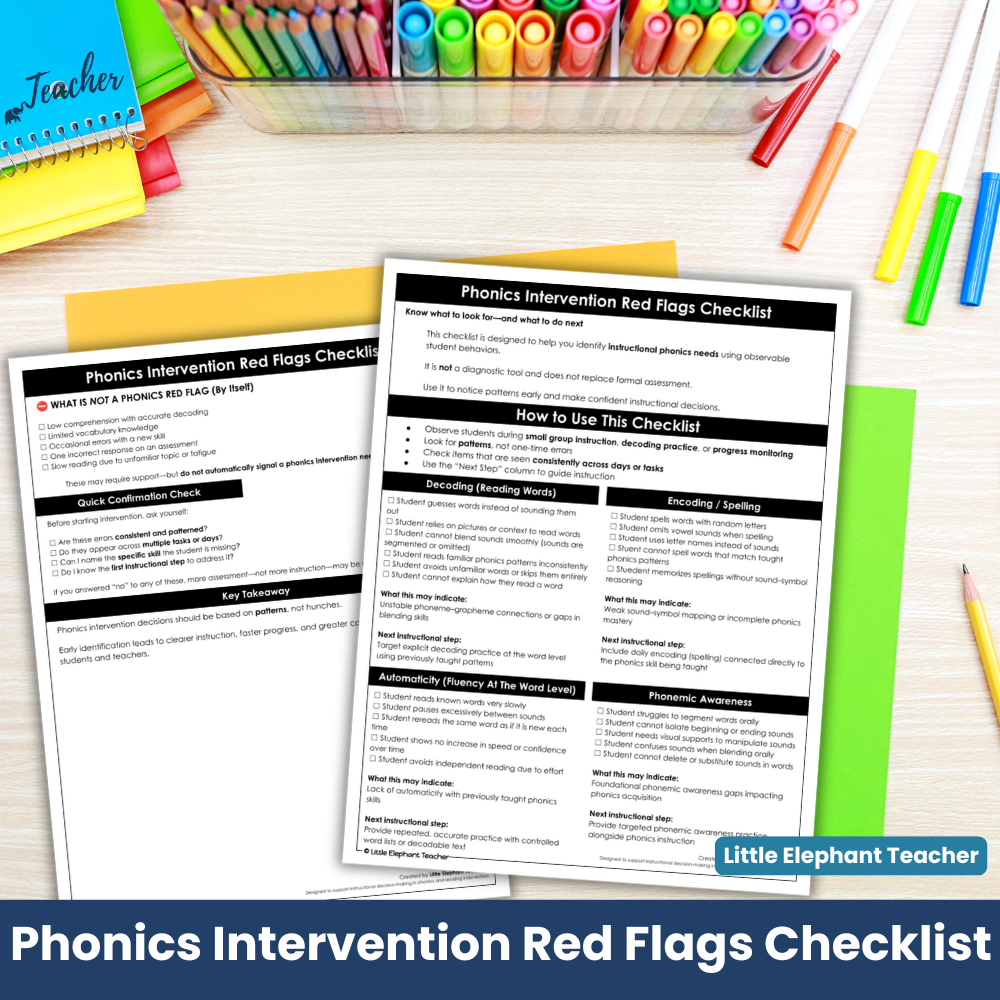
📥 Free Download: Phonics Intervention Red Flags Checklist
Know what to look for—and what to do next—before guessing or over-intervening.
This one-page checklist helps you identify instructional phonics needs using observable student behaviors—not labels or test scores.

When You Know Something Is Off—but Can’t Quite Name It
This is one of the most common questions in reading intervention:
“How do I know if this student actually needs phonics intervention?”
Many teachers can sense it right away.
A student kind of reads.
They get through the text, but it doesn’t sound smooth.
They hesitate, guess, or stall—especially when the words change just a little.
You may even have assessment data, but it doesn’t always feel actionable. Or the data confirms a concern, yet you’re still unsure whether it truly points to a phonics issue.
This is where many teachers get stuck.
Phonics intervention isn’t about waiting for a student to fail. It’s about noticing patterns early and responding intentionally. The goal isn’t to diagnose or label—it’s to gain clarity.
Phonics intervention focuses on strengthening phoneme–grapheme connections when decoding accuracy is unstable.
Before we talk about what to teach, we need to be clear on who actually needs phonics intervention—and why.
What Phonics Intervention Is (and Isn’t)
Phonics intervention is not extra worksheets, random review, or more time doing the same thing.
Phonics intervention is:
Targeted — focused on a specific missing skill
Skill-specific — grounded in phoneme–grapheme relationships
Data-informed — driven by what students actually do, not assumptions
Many students who need phonics intervention have unfinished foundational skills—even if they are older or have been exposed to phonics before.
What to Listen For
During reading or word work, notice whether students:
Guess instead of decoding
Read familiar phonics patterns inconsistently
Rely on pictures or context rather than letter–sound relationships
Quick Check
After a student reads a word, ask:
“How did you read that word?”
If they can’t explain the sounds or pattern they used, the word may not be fully mapped yet.
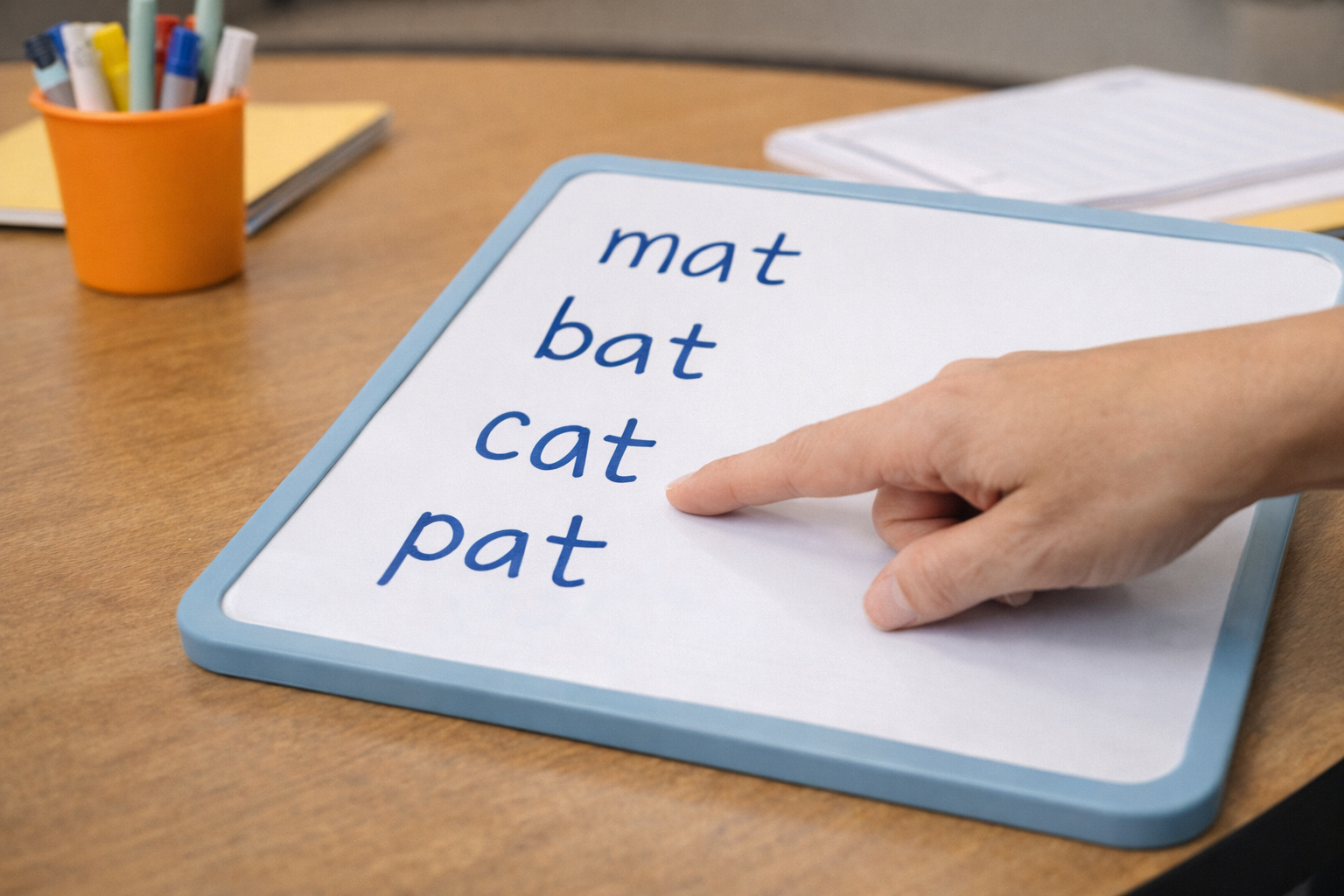
How Teachers Can Tell the Difference Between Guessing and Decoding
Guessing and decoding can sound similar at first—but they are very different processes.
Students who are guessing may:
Say the word quickly without attending to all the letters
Rely on the first sound only
Substitute a word that “makes sense”
Students who are decoding may:
Attend to each sound
Attempt to blend, even if slowly
Self-correct when the word doesn’t sound right
The key difference is how the word was read—not just whether it was read correctly.
Early Signs a Student Needs Phonics Intervention
The key to identifying a phonics intervention need is organization. When you know what to look for, patterns become much easier to see.
Below are common signs a student needs phonics intervention, grouped by instructional area.
Decoding (Reading Words)
You may notice that a student:
Reads CVC or familiar patterns inaccurately
Struggles to blend sounds smoothly
Guesses when a word looks unfamiliar
These decoding difficulties often signal weak or unstable phoneme–grapheme connections.
Encoding / Spelling
You may see:
Random letters instead of sound-based spelling
Missing vowel sounds
Spellings that don’t align with taught phonics patterns
Spelling errors are often one of the clearest indicators of phonics gaps.
Automaticity (Word-Level Fluency)
Watch for students who:
Read known words very slowly
Pause between sounds even after instruction
Show little growth in speed or confidence over time
Phonemic Awareness
Especially common in younger students—or older struggling readers:
Difficulty segmenting or manipulating sounds
Heavy reliance on visual supports
Confusion during oral blending tasks
What to Listen For
Across all areas, pay attention to:
Hesitation before vowels
Guessing longer words
Lack of self-correction
Quick Check
Dictate three words from a previously taught pattern.
Watch how the student responds—not just whether the answer is correct.

What Is Not a Phonics Intervention Signal
This part matters just as much.
Not every struggle means a student needs phonics intervention.
On its own, the following do not automatically signal a phonics need:
Low comprehension with accurate decoding
Limited vocabulary knowledge
One-off errors
A single low assessment score
What to Listen For
Phonics concerns show up as consistent, patterned errors across days and tasks—not isolated moments.
Quick Check
Ask yourself:
Is this a pattern—or a moment?
Clear progress monitoring also helps you determine when a student is ready to move forward in phonics instruction, rather than staying on a skill longer than necessary or moving on too quickly.
What to Do After You Identify a Phonics Intervention Need
Once you start seeing consistent patterns, the next step is intentional action—not more guessing.
Notice → confirm → teach → monitor.
A simple framework helps guide instruction:
Confirm with a quick skill-based check
Identify the first missing skill (not everything at once)
Match instruction directly to that skill
Monitor briefly and intentionally
What to Listen For
With the right instruction in place, you’ll often hear:
Faster responses
More confident decoding
Transfer to new words
Quick Check
Reassess the same pattern after 2–3 focused sessions.
If the skill is still unstable, you now have clear data to guide next steps.
A quick phonics screener can be especially helpful when you want to confirm a suspected gap, identify a starting point, or monitor progress without interrupting instruction or overtesting students.

A Quick Word About Tools and Data
If you want a structured way to confirm what you’re seeing, phonics assessment and progress monitoring tools can make these decisions much clearer. They help you pinpoint where to begin and what to teach next—without relying on hunches.
This is where assessment-driven instruction and using data to guide phonics decisions becomes essential.
There are also phonics assessments that are quick and effective across a range of skills, giving you flexible options depending on whether you’re checking decoding, spelling, or phonemic awareness.
Why Guessing Costs Time (and Confidence)
When instruction isn’t aligned to need:
Progress slows
Confidence drops
Gaps widen over time
When phonics intervention is clear and targeted:
Students move faster
Errors decrease
Independence increases
Quick Check
Ask yourself:
Final Takeaway
You don’t need to wait for students to fail.
Clear phonics intervention decisions come from noticing patterns early and responding intentionally. When you know what to look for, instruction becomes more efficient—and far more effective.
Ready for Deeper Clarity?
If you’ve ever wondered:
“Is this a phonics issue—or something else?”
The Phonics Assessment Course is designed to help you answer that question with confidence and clarity.
Inside the course, you’ll learn:
What to assess
How to interpret student errors
How to choose the right starting point for instruction
So you’re never guessing—and your students aren’t either.
Frequently Asked Questions
How early can phonics intervention begin?
As soon as consistent patterns appear. Early identification prevents larger gaps later.
Can older students still need phonics intervention?
Yes. Many older students have unfinished foundational skills that require explicit instruction.
How do I know if a student needs phonics or fluency support?
If decoding accuracy is unstable, phonics is still the priority. Fluency comes after skills are secure.
How often should phonics progress monitoring occur?
Brief, frequent checks every 1–2 weeks provide clearer instructional guidance than infrequent testing.
About the Author
Andrea Russman | Little Elephant Teacher®
Andrea Russman is an intervention teacher and curriculum designer who creates UFLI-aligned, Science of Reading–friendly resources for real classrooms. She specializes in helping teachers implement clear placement, small-group instruction, and progress monitoring systems that actually fit into the school day.