How to Analyze Phonics Errors (What Decoding Mistakes Reveal About Reading)
Teachers often ask how to analyze phonics errors and what decoding mistakes actually reveal about a student’s reading development.

Teachers can learn a great deal about reading development by listening carefully to students’ decoding attempts during reading.
During reading instruction, teachers hear decoding mistakes every day.
A student reads:
ship → sip
coat → cot
stop → sop
In the moment, it’s easy to simply correct the word and keep moving.
But many teachers quietly wonder:
• What does that mistake actually mean?
• What phonics skill might be missing?
• What should I teach next?
If you've ever sat beside a student during reading and thought, “Why did they read it that way?” you're not alone.
Most teachers notice these kinds of mistakes every day, but many were never taught what those errors actually reveal.
The important thing to remember is that most decoding errors aren’t random at all. They often show how a student is trying to process the letters on the page.
Many teachers want to understand how to analyze phonics errors so they can figure out what decoding mistakes reveal about a student’s reading development.
Once you start noticing patterns in students’ decoding attempts, those mistakes begin to tell you something.
Learning to recognize those patterns is an important part of phonics error analysis.
Why Decoding Errors Matter
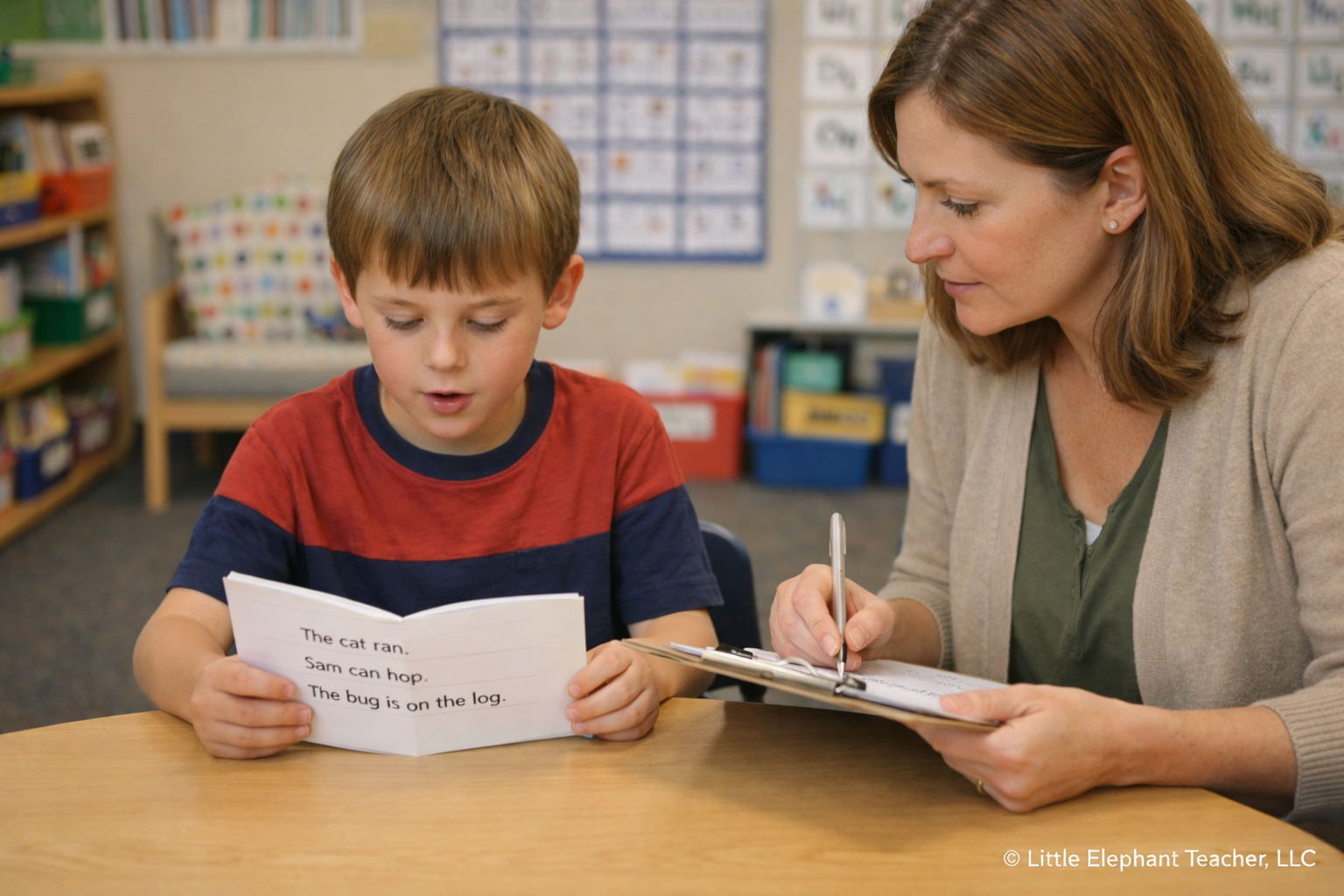
Listening closely to how students decode words helps teachers identify phonics patterns that may still be developing.
When students read aloud, they give us a window into how they are trying to process print.
Sometimes a student reads:
ship → sip
At first glance, it might just look like a mistake.
But if you pause for a moment, you can hear what the student is actually doing. They are attempting to decode the word based on the letters they see.
That attempt matters.
Decoding errors are instructional clues.
They show how students are connecting sounds, letters, and patterns.
Research from organizations such as the International Dyslexia Association and the National Reading Panel highlights the importance of explicit phonics instruction and close attention to student decoding.
When teachers begin paying attention to phonics error patterns, those mistakes often reveal where phonics knowledge is still developing.
Phonics error analysis is also a key part of learning how to use phonics data to guide instruction.
How to Use Phonics Data to Drive Instruction
What Phonics Errors Can Reveal
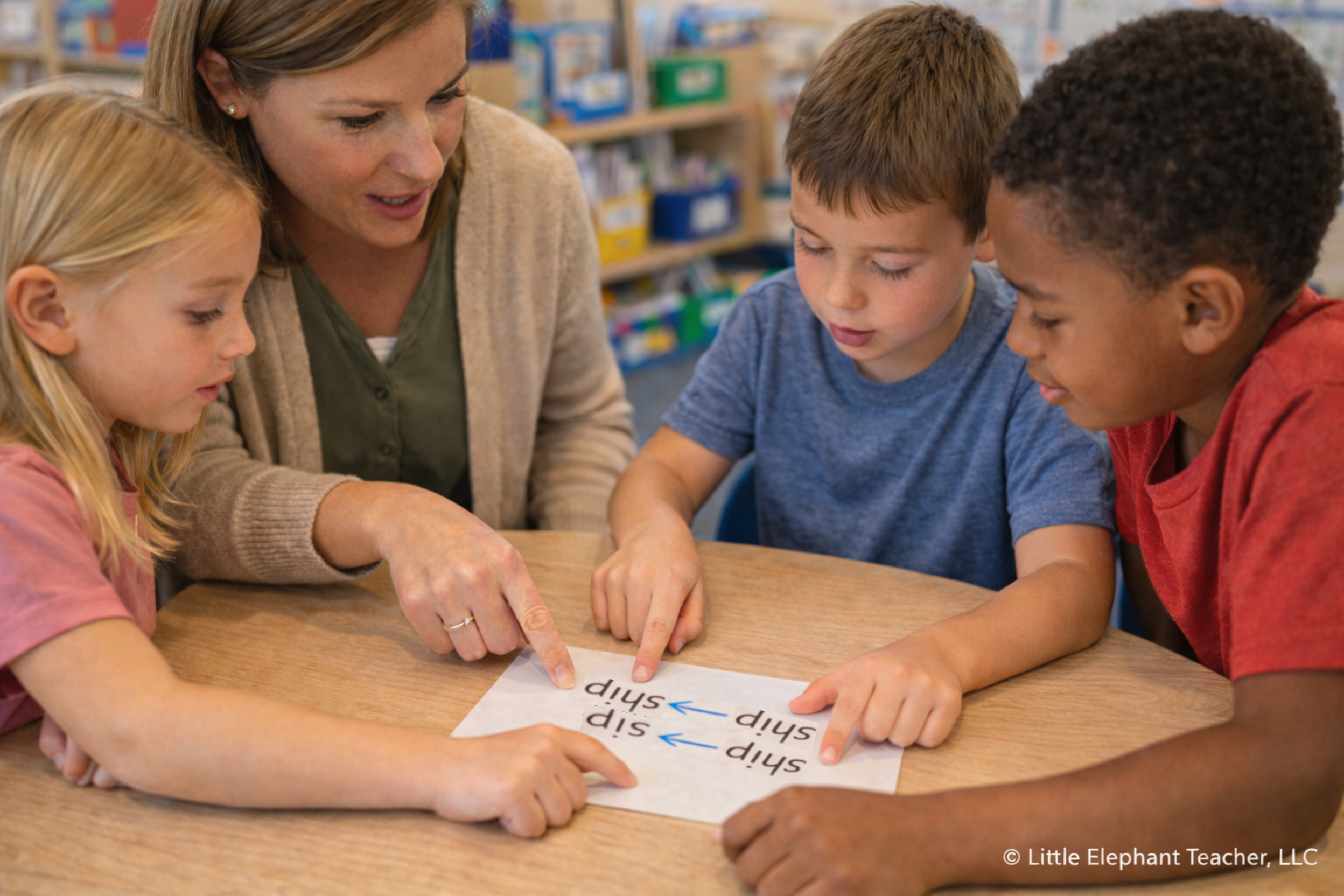
Small-group reading conversations can reveal important decoding patterns and provide clues about how students are processing phonics skills.
When teachers begin learning how to analyze phonics errors, the first step is simply noticing patterns.
One decoding mistake rarely tells the whole story.
But when the same type of error appears across several words, it often reveals something about how the student is approaching print.
For example:
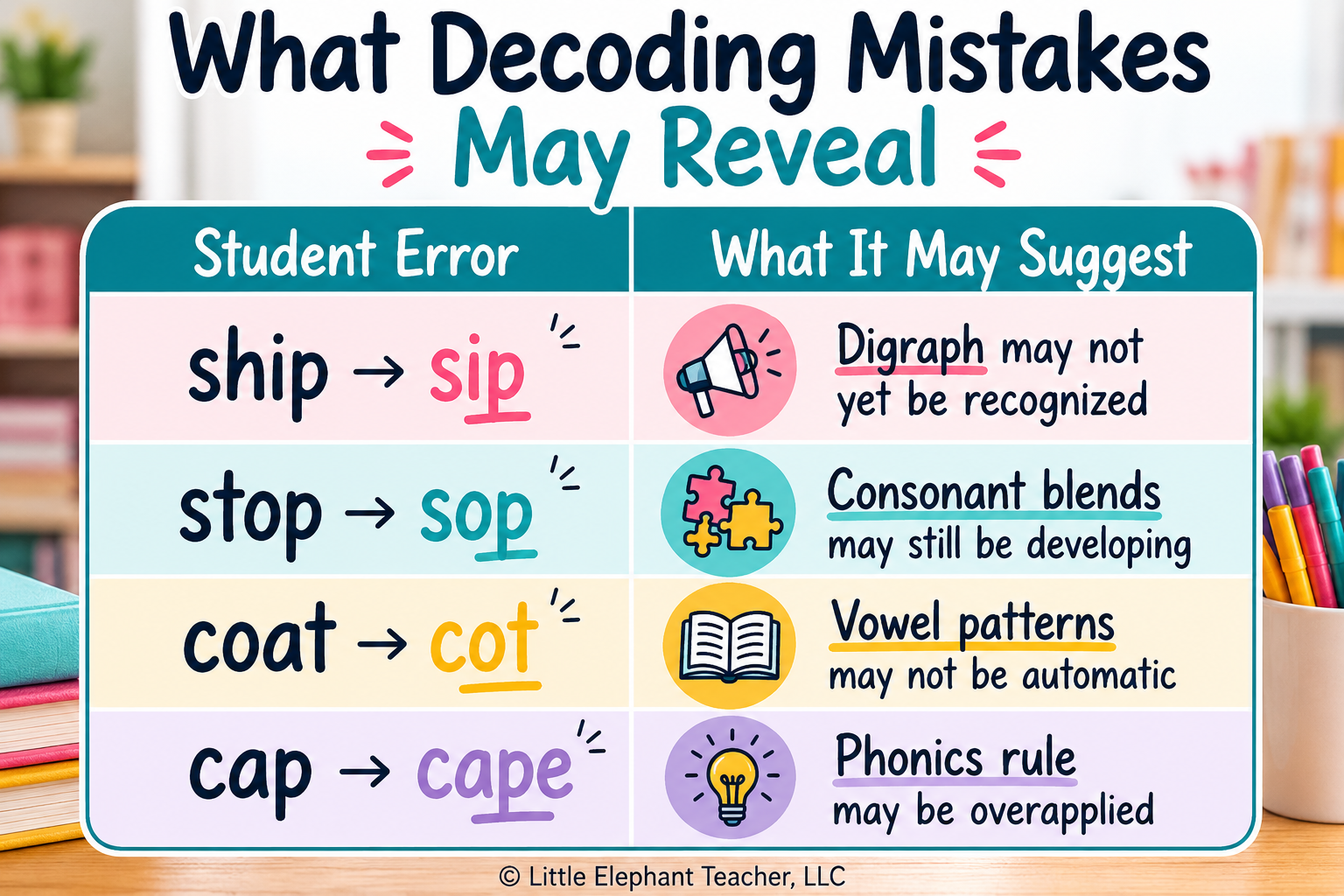
Decoding mistakes and what they reveal
Sometimes teachers notice a student read ship as sip and quickly correct it.
But if that same pattern appears again in other words, it may reveal something about how the student is processing the digraph.
Those patterns are where phonics error analysis becomes helpful.
Common Phonics Errors in Reading (Examples Teachers Often Hear)
When students are learning to read, certain phonics errors appear frequently. Recognizing these common decoding errors can help teachers understand how students are processing words.
Substitution Errors

Substitution errors occur when a student replaces one sound with another while decoding a word.
Examples:
ship → sip
chin → sin
chat → cat
With substitution errors, the student replaces one sound with another.
Often, the student is recognizing part of the word, but a specific phonics pattern hasn’t become automatic yet.
For example:
ship → sip
The student recognizes the s, but may not yet recognize sh as one sound.
Word mapping activities can help strengthen those sound-spelling connections over time.
Vowel Errors
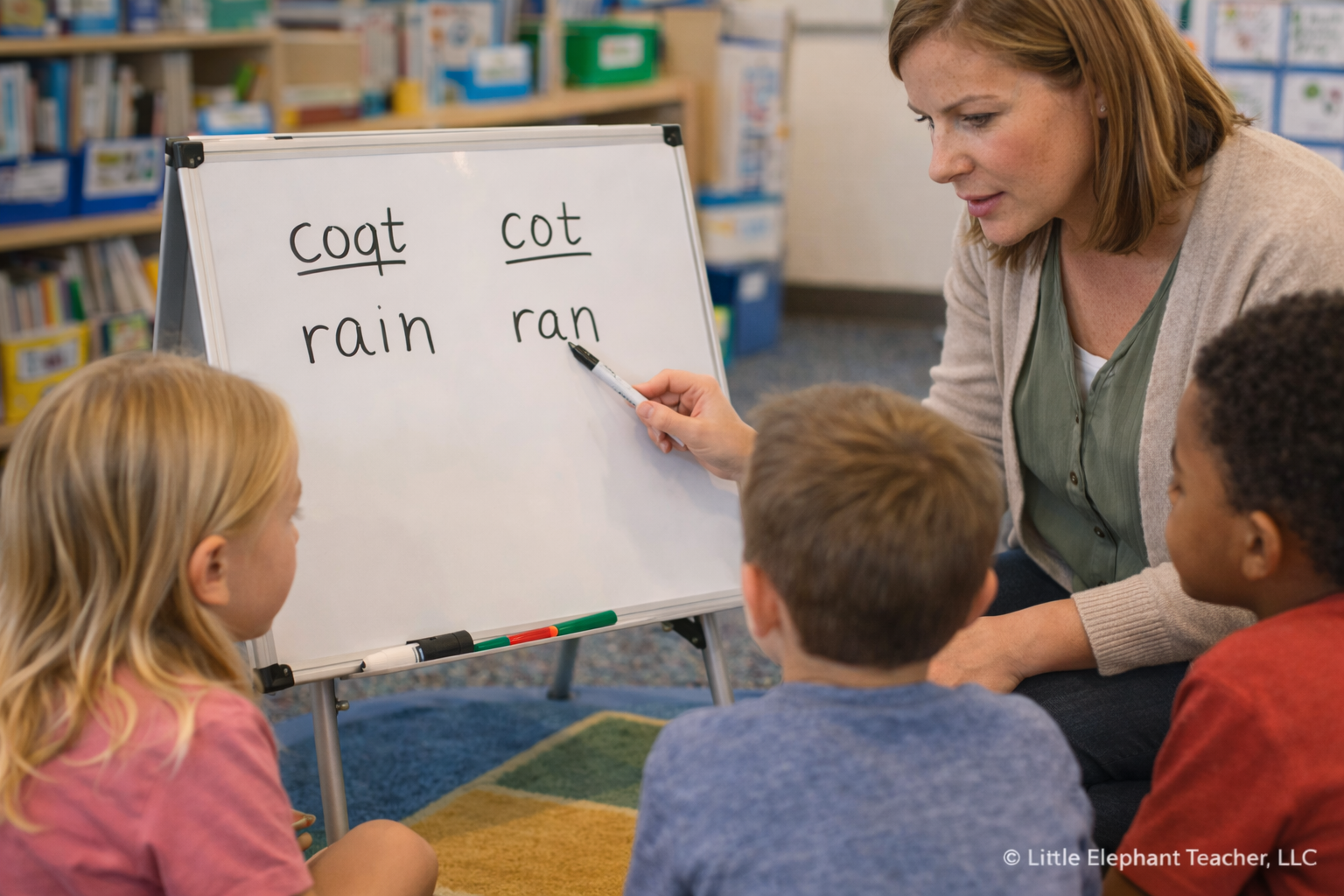
Vowel errors often appear when students are still developing automatic recognition of vowel patterns.
Examples:
coat → cot
rain → ran
seat → set
Vowels are one of the trickiest parts of English spelling.
Students often experiment with different possibilities as they learn how vowel patterns work.
Research organizations such as the Florida Center for Reading Research (FCRR) emphasize the importance of repeated exposure to vowel patterns during reading practice.
Decodable passages allow teachers to observe whether students can apply vowel patterns in connected reading.
Phoneme Omissions
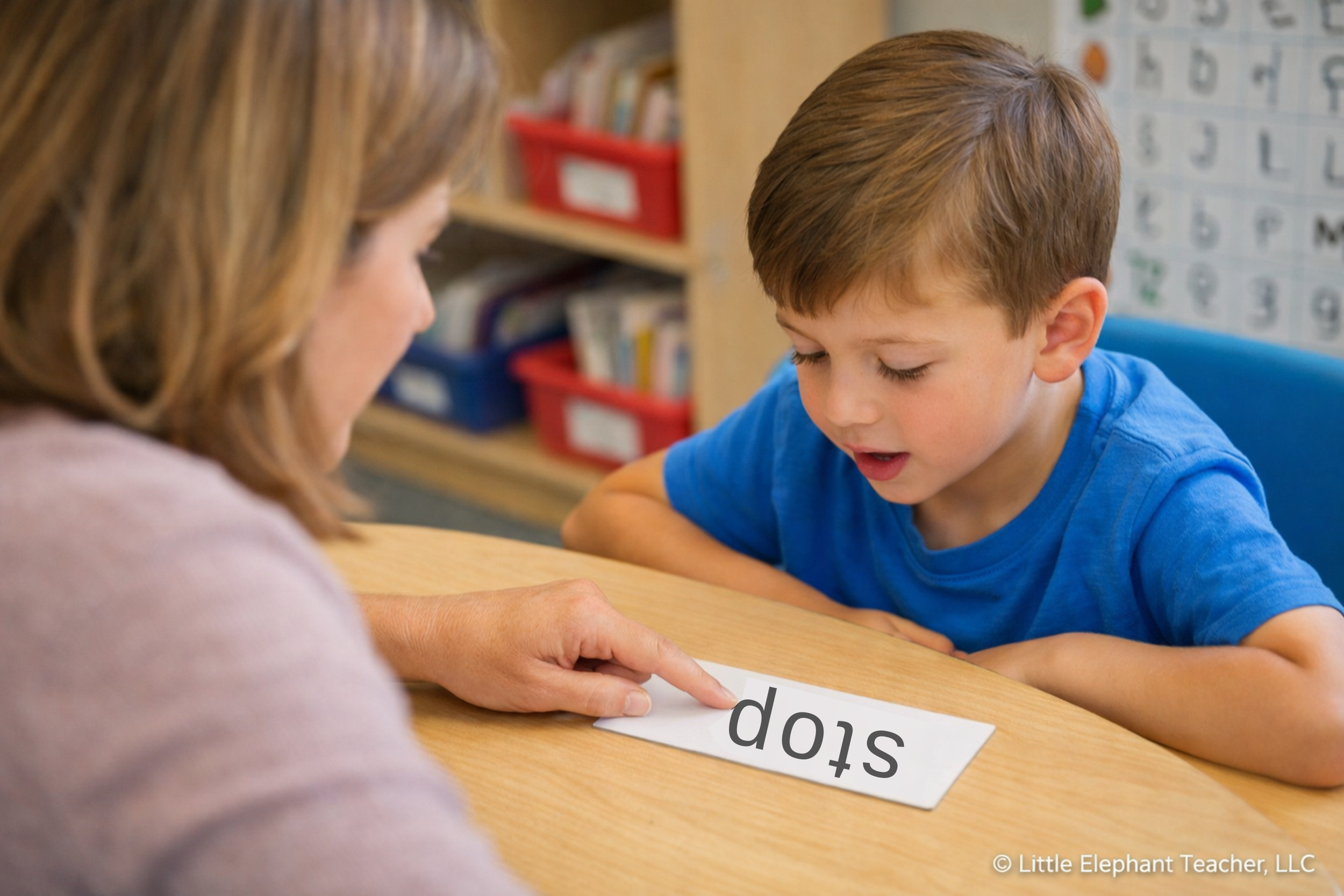
Phoneme omissions often occur when students drop one sound from a consonant blend.
Examples:
stop → sop
slip → sip
flag → fag
In these situations, one sound in the word disappears.
This often happens with consonant blends, where students must hold multiple sounds in sequence.
Over time, practice with blending and segmenting helps students represent every sound in the word.
Guessing vs Decoding
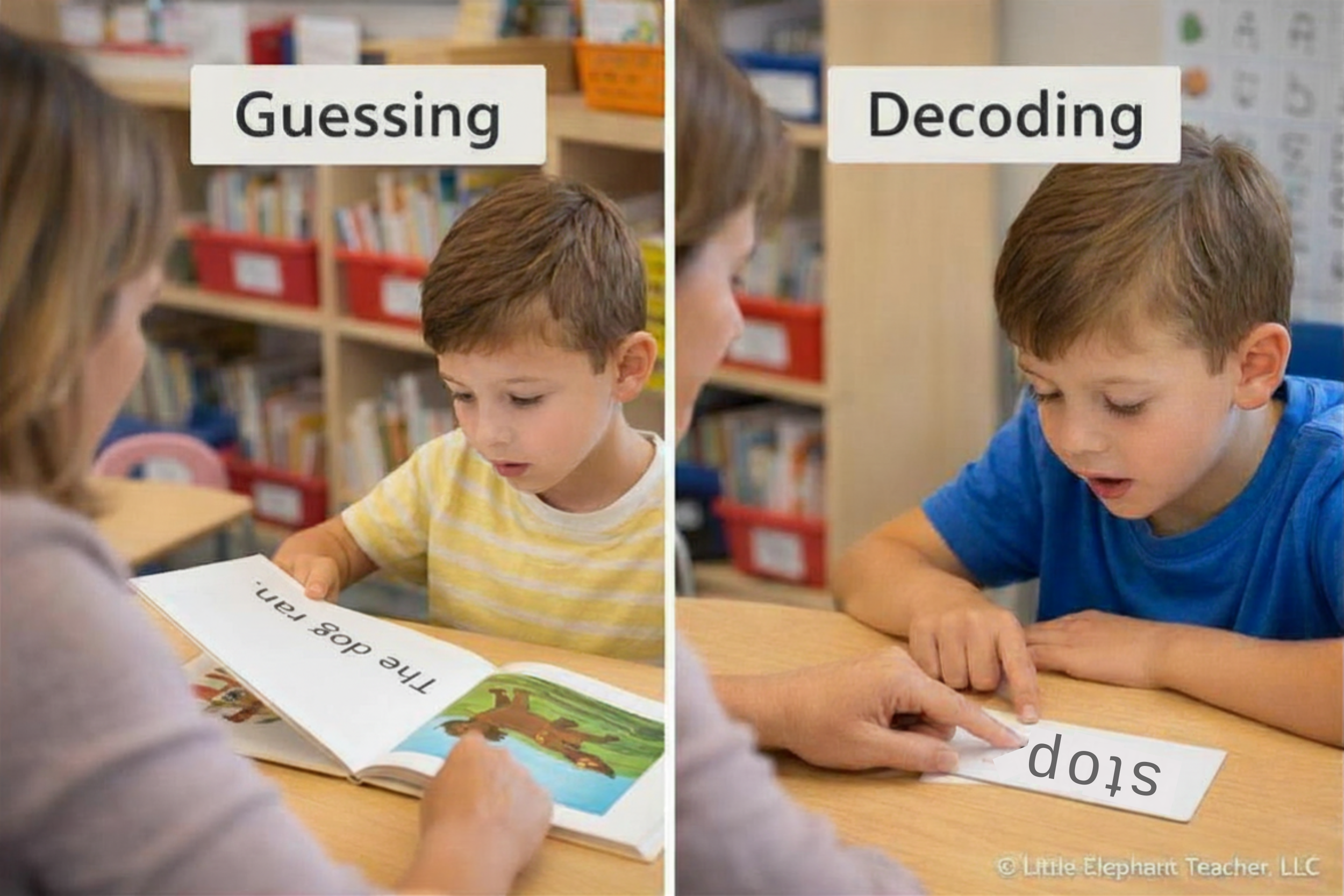
Guessing relies on pictures or context, while decoding focuses on the letters in the word.
Sometimes teachers notice students reading words that don’t match the letters on the page.
It helps to distinguish between guessing and decoding attempts.
Guessing relies on pictures or context clues.
Decoding attempts sound different.
Example:
ship → sip
The student is clearly trying to process the letters.
Those attempts are actually productive because the student is engaging with the alphabetic principle.
Sometimes guessing habits develop when instruction moves too quickly.
Common Phonics Mistakes Teachers Make
Misapplied Phonics Rules
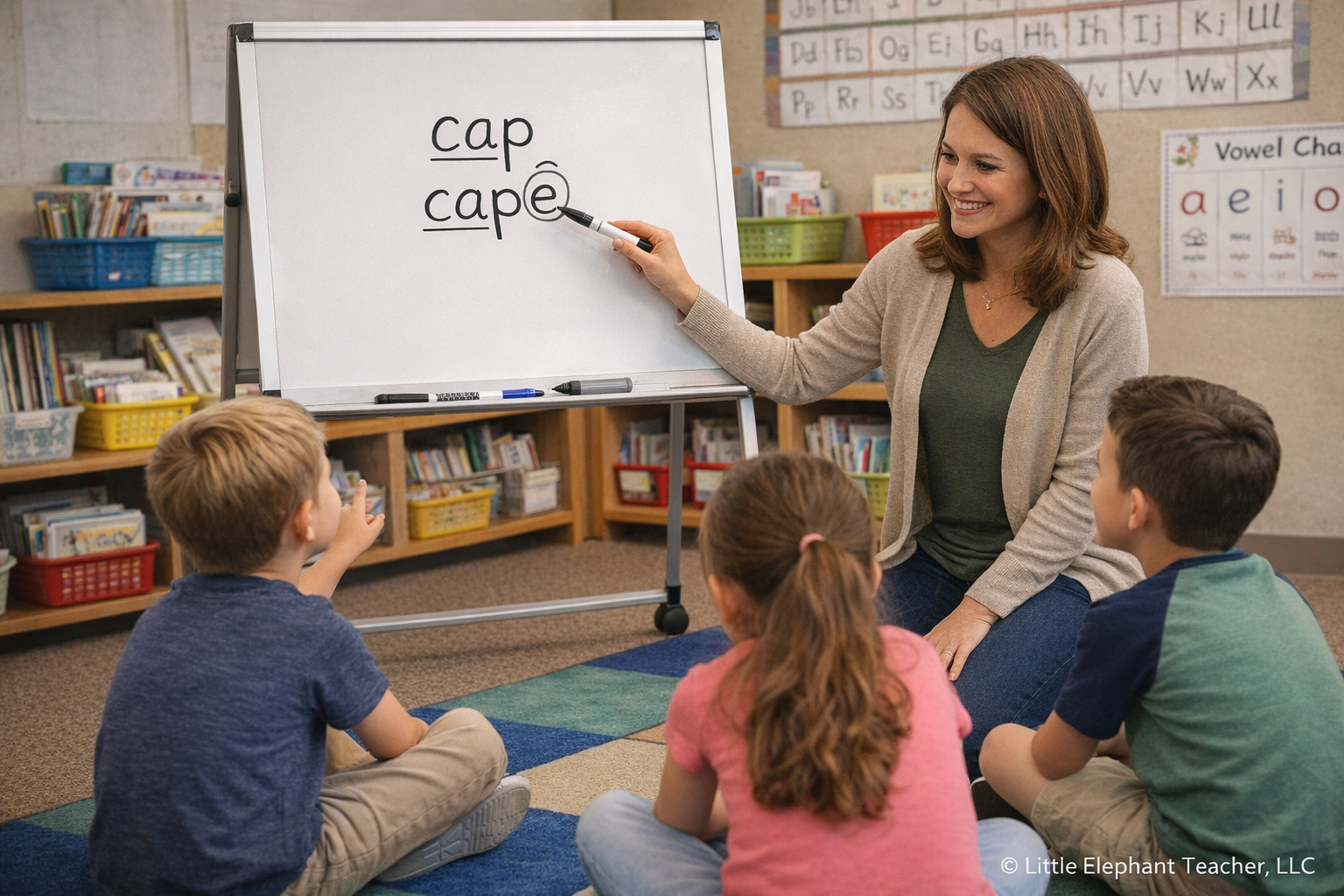
Students sometimes overapply newly learned phonics rules before fully understanding when the pattern applies.
Sometimes students apply a new phonics rule everywhere.
For example:
cap → cape
The student recently learned silent e, so they begin applying it broadly.
This often happens while students are still sorting out how different spelling patterns work.
How Error Patterns Can Guide Instruction
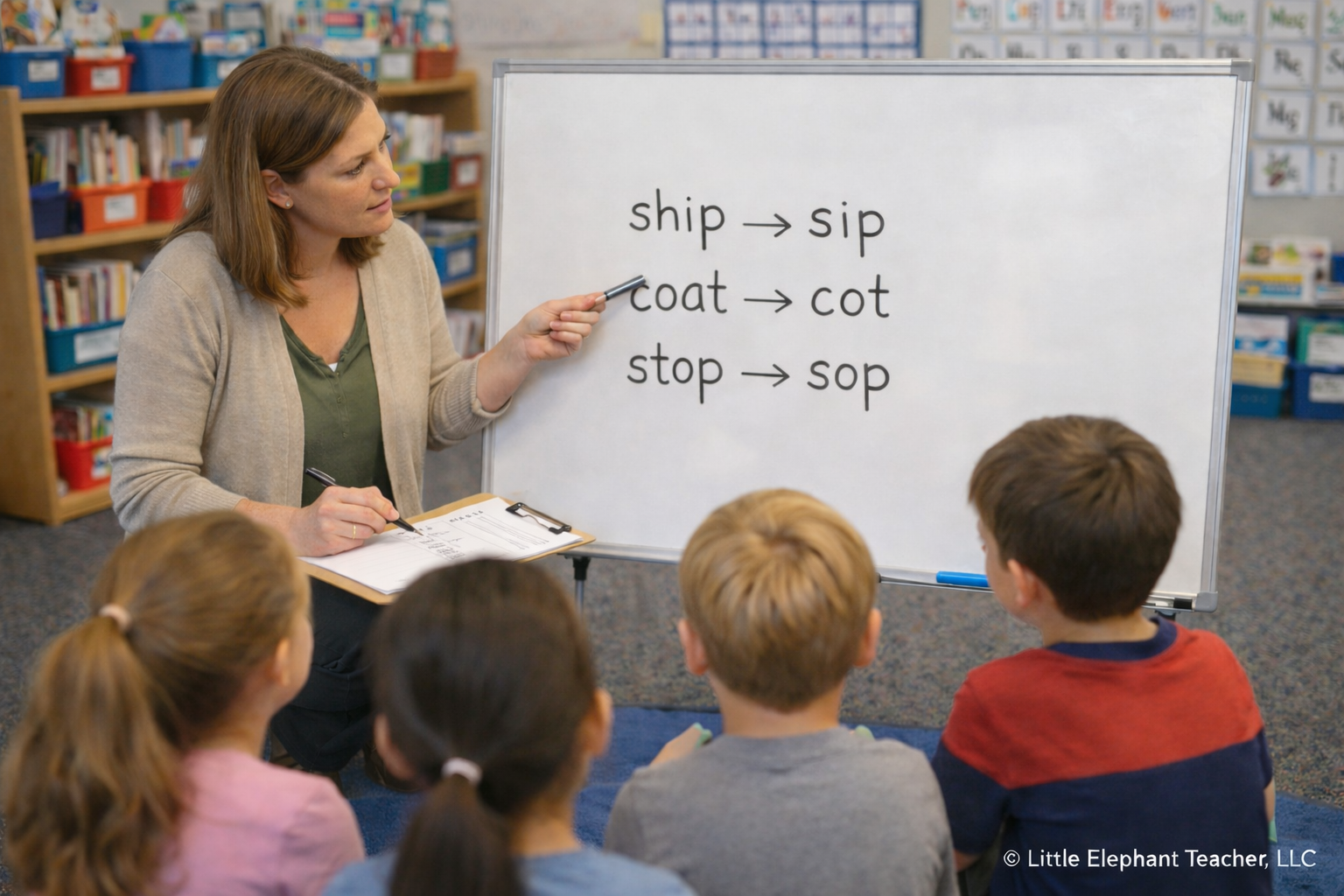
Examples of decoding errors can help teachers notice phonics patterns and better understand how students are processing words during reading.
Teachers often learn the most by looking for patterns across multiple reading attempts.
For example:
• Are vowel errors showing up repeatedly?
• Are blends being dropped?
• Are certain patterns misread?
Once teachers recognize those patterns, it becomes easier to determine what phonics skill should be taught next.
The Role of a Phonics Scope and Sequence
Phonics skills build over time.
When an earlier skill hasn’t fully developed, decoding errors may appear when more complex words are introduced.
A structured phonics progression helps teachers understand how phonics skills connect.
Final Thoughts
Decoding errors can feel frustrating in the moment.
But when teachers begin looking closely at those moments, the mistakes often reveal something important.
Decoding errors are not random mistakes — they are instructional signals.
When teachers learn how to analyze phonics errors, they begin to see decoding mistakes as helpful information about how students are processing print.
If you'd like to learn how to systematically collect and interpret phonics assessment data, I walk through the full process inside my course Phonics Assessments That Drive Instruction™.
In the course, I explain how phonics assessments help identify skill gaps and guide clear instructional decisions for reading intervention.
Andrea is an elementary educator and the creator behind Little Elephant Teacher® LLC., where she supports teachers with practical, research-aligned phonics instruction. She is passionate about helping educators confidently use phonics assessment data, analyze decoding errors, and make clear instructional decisions rooted in the Science of Reading. Through her resources, courses, and classroom-tested strategies, Andrea helps teachers bridge the gap between phonics instruction and meaningful reading success so every student can grow into a confident reader.