
Small-group phonics instruction allows teachers to observe student decoding strategies.
Teachers often wonder why phonics instruction sometimes feels harder than it should. Many of the challenges come from common phonics mistakes teachers make during instruction—small habits that can quietly interfere with decoding development.
Phonics instruction is one of the most well-intentioned areas of literacy teaching—and also one of the easiest places for small instructional habits to quietly derail progress.
If you’ve ever thought:
• “I’m doing everything I know to do.”
• “They’re engaged, but it’s not sticking.”
• “Why am I reteaching the same skill again?”
You’re not alone.
Most phonics pitfalls don’t come from poor teaching. They come from automatic instructional habits that develop over time—often without teachers realizing they’re happening.
Many educators were trained on what to teach in phonics, but not always on what to avoid. And when instruction stalls, it’s often not because something is missing—it’s because something well-intended is getting in the way.
When phonics instruction doesn’t stick, it’s rarely about effort.
It’s about information.
Before we look at how to fix common phonics instructional mistakes, let’s name them clearly—without blame and with purpose.
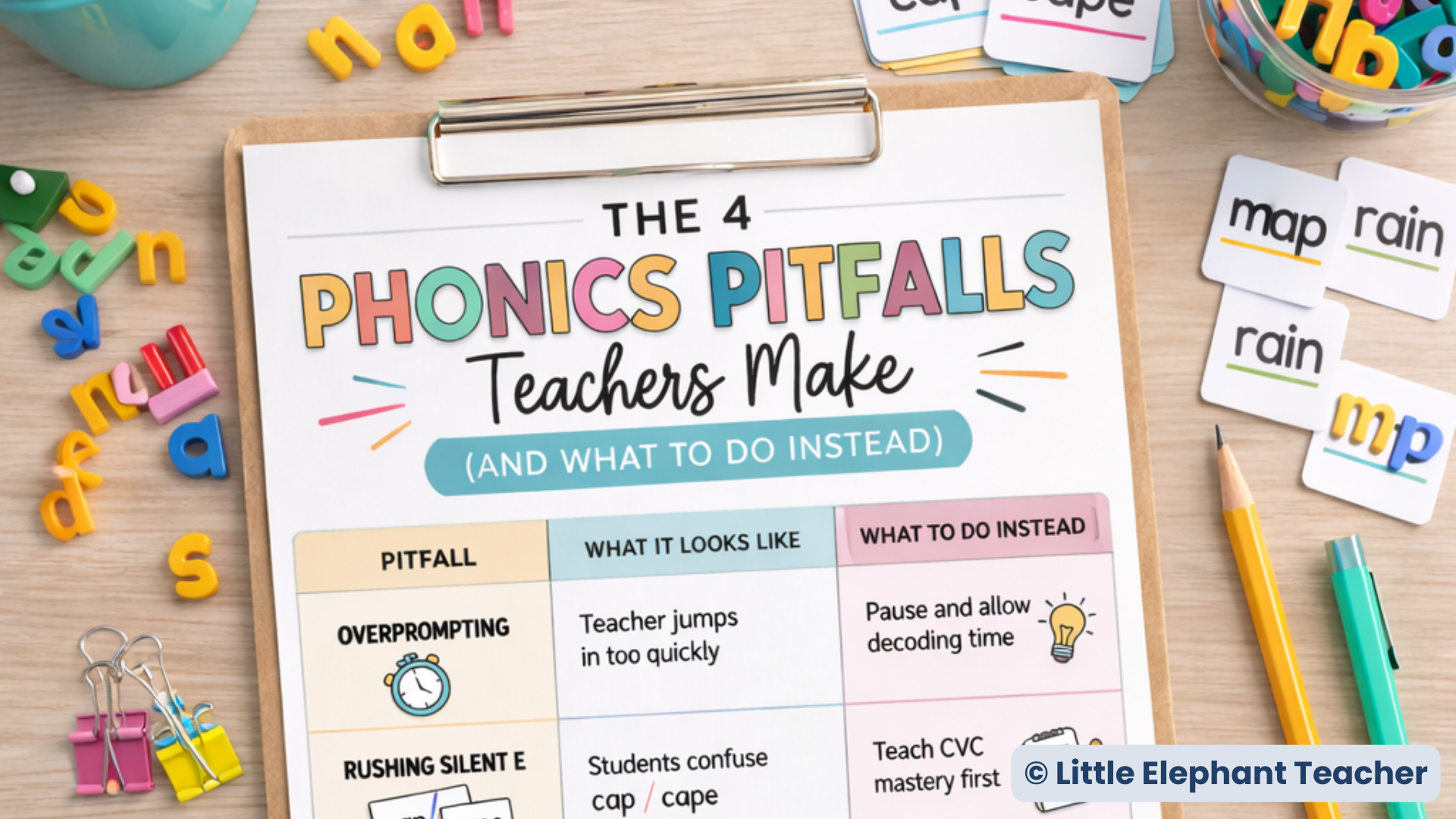
Quick reference guide showing common phonics mistakes teachers make and how to fix them.
Save This for Later
Many teachers like having a quick reference nearby while teaching.
I created a free printable guide that summarizes the four phonics pitfalls in this article and what to do instead.
You can keep it at your small-group table or with your phonics materials.
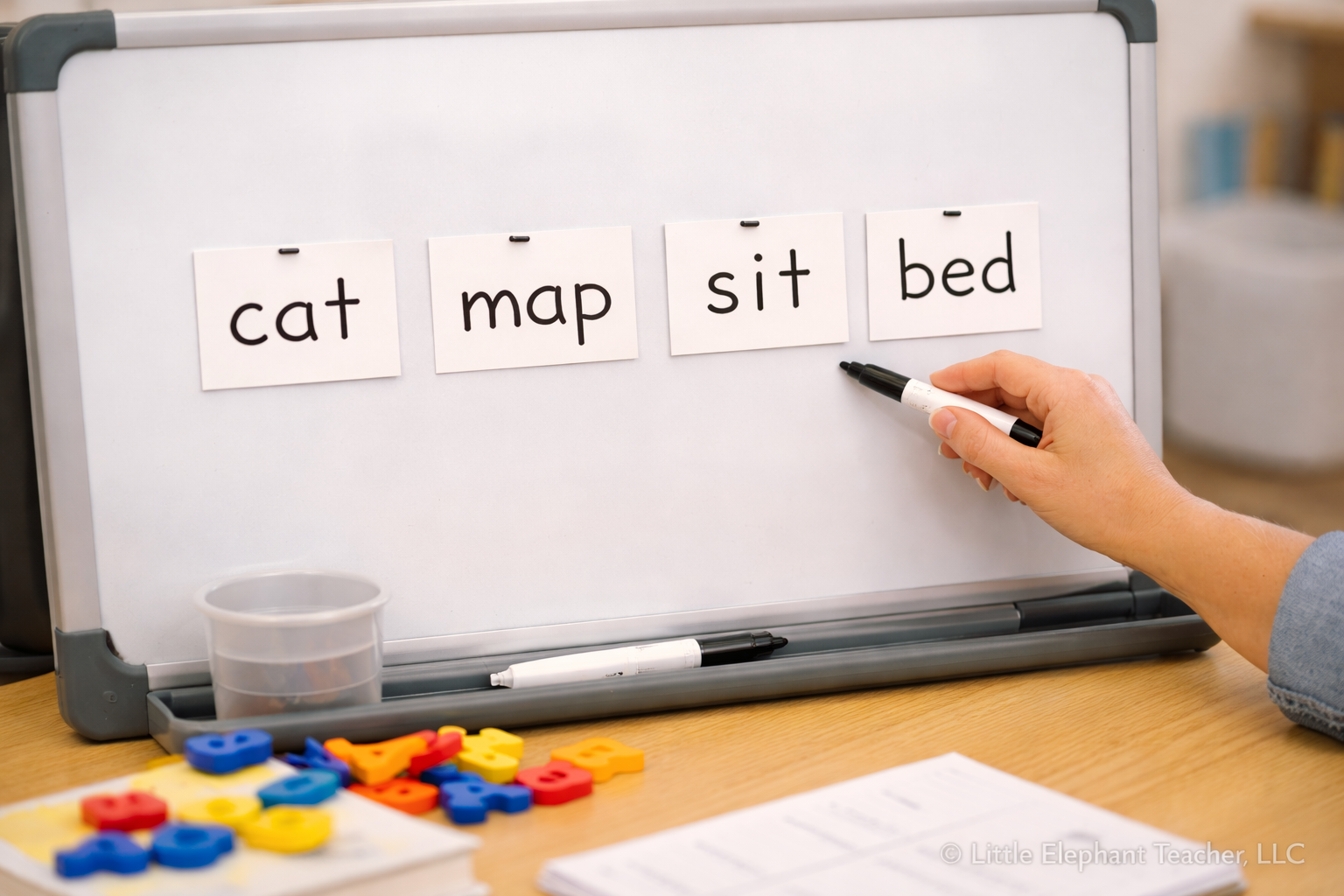
Pausing during phonics instruction allows students time to independently decode CVC words.
Phonics Pitfall #1: Overprompting Instead of Letting Students Decode
One of the most common phonics teaching errors happens quietly—right in the middle of instruction.
Why Teachers Do This
• We want to prevent frustration
• We want students to feel successful
• Small-group time feels tight
So we help. Quickly. Automatically.
How It Shows Up
You might notice yourself:
• Telling a sound before the student finishes
• Repeatedly pointing to letters
• Saying “try again” without clarifying what to try
Why It Limits Progress
Overprompting interrupts the decoding process.
• Students rely on the teacher instead of the word
• Orthographic mapping doesn’t fully occur
• Errors are masked instead of revealed
Students may read the word correctly—but not independently.
What to Do Instead
• Allow intentional wait time
• Prompt with strategy instead of answers
• Observe how the student is processing the word
What to Listen For
• Independent sound blending
• Attempts to self-correct
• Audible decoding strategies
Quick Check
Ask yourself:
Did the student solve the word—or did I solve it for them?
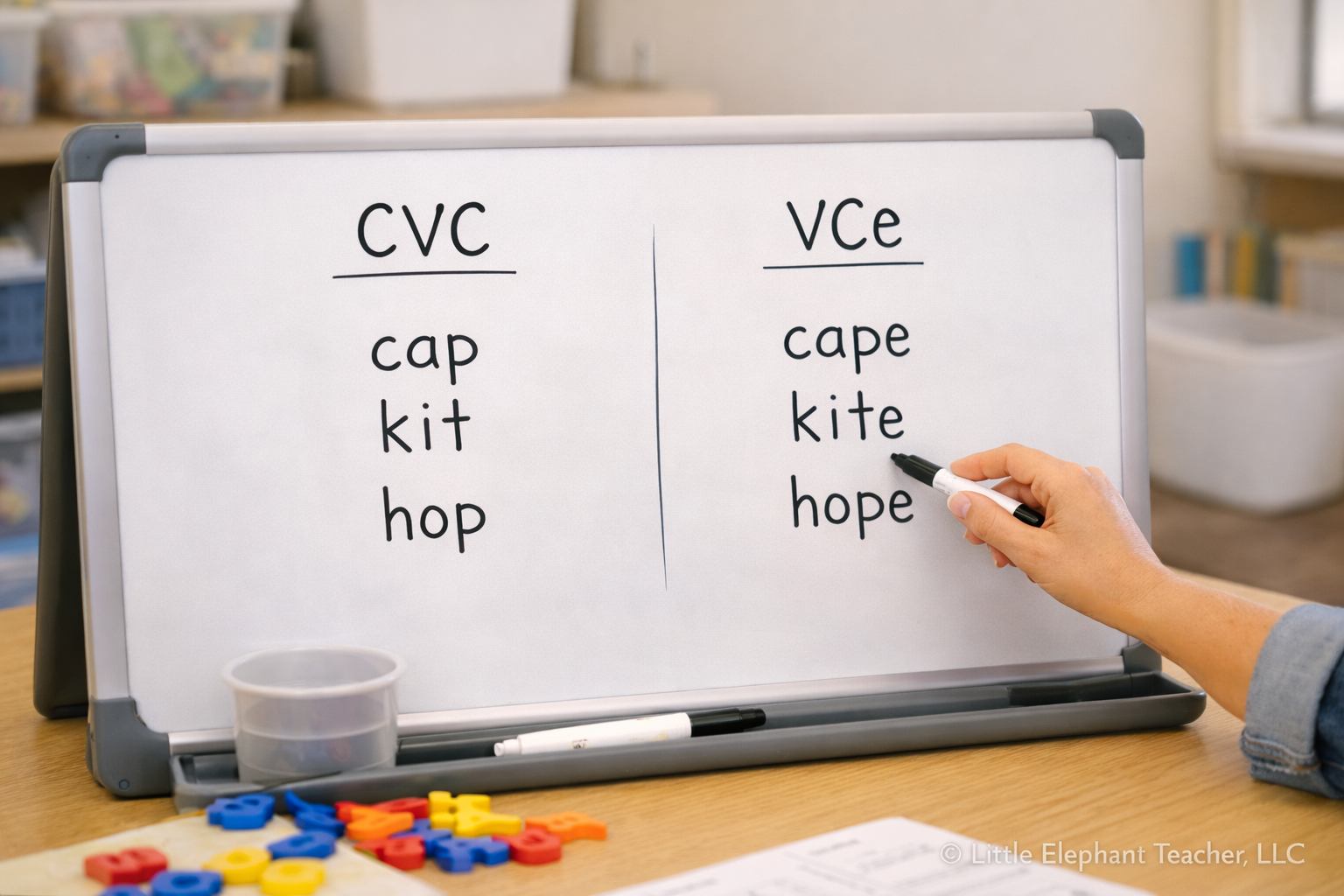
Comparing CVC and VCe words helps students understand how silent e changes the vowel sound.
Phonics Pitfall #2: Rushing Silent E (VCe) Before Short Vowels Are Secure
Rushing silent e instruction is one of the most common phonics intervention mistakes—especially in early grades.
Why Teachers Do This
• Curriculum pacing pressure
• Students recognize the pattern visually
• The desire to keep moving forward
Students may read cap and cape correctly, so it feels safe to move on.
How It Shows Up
• Students confuse short and long vowels
• VCe words are read correctly but inconsistently
• Decoding falls apart in unfamiliar words
Why It Limits Progress
When short vowels aren’t secure:
• VCe becomes memorized instead of decoded
• Vowel confusion increases
• Multisyllabic reading becomes harder later
What to Do Instead
• Confirm short vowel mastery first
• Explicitly contrast CVC vs VCe words
• Require students to explain why the vowel changes
What to Listen For
• Clear vowel articulation
• Accurate explanation of why the vowel changed
Quick Check
Ask:
Can the student explain why the vowel changed in this word?
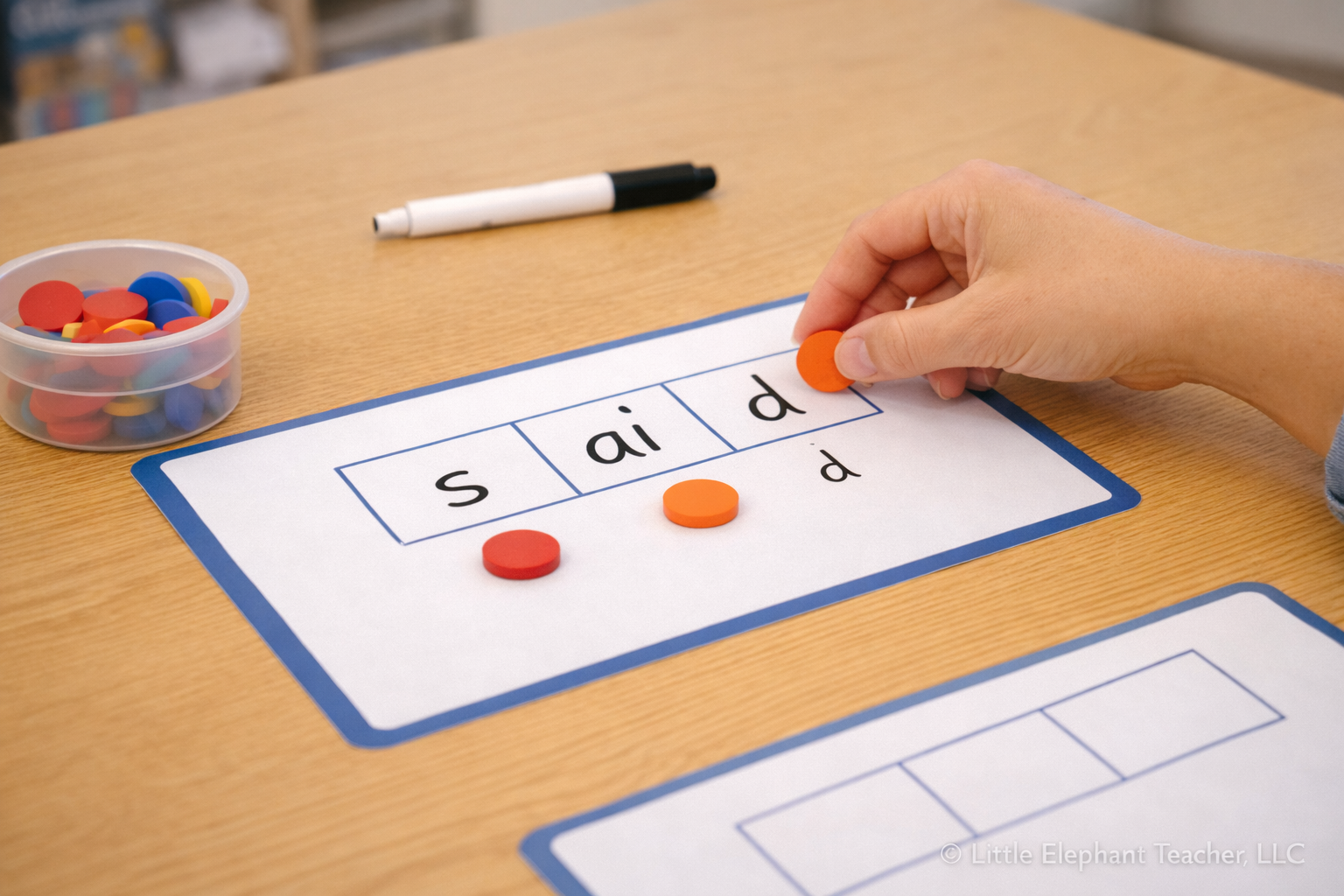
Phoneme-grapheme mapping helps students analyze heart words instead of memorizing them visually.
Phonics Pitfall #3: Treating Sight (Heart) Words as Memorization
Few topics create more confusion in early reading instruction than the relationship between sight words and phonics.
Why Teachers Do This
• Pressure for quick fluency
• Misunderstanding of high-frequency words
• Limited instructional time
How It Shows Up
• Flashcard drills only
• Guessing based on word shape or first letter
• Difficulty reading the words in connected text
Why It Limits Progress
When words are memorized instead of mapped:
• Orthographic mapping doesn’t occur
• Students can’t apply patterns to new words
• Reading accuracy remains fragile
What to Do Instead
• Connect known phonics patterns to the regular parts of the word
• Identify the irregular or “tricky” part
• Use phoneme-grapheme word mapping
What to Listen For
• Sound-based explanations
• Attention to the tricky part of the word
Quick Check
Ask:
Which part of this word follows phonics rules—and which part doesn’t?

Reviewing phonics assessment data helps teachers identify the next instructional step for struggling readers.
Phonics Pitfall #4: Starting Instruction Too Far Ahead of Students’ Skills
Starting phonics instruction too far ahead of students’ skills is one of the most costly phonics intervention mistakes to avoid.
Why Teachers Do This
• Fear of going “too far back”
• Time constraints
• Grade-level expectations
How It Shows Up
• Students appear engaged but don’t retain skills
• Frequent reteaching
• Slow progress despite instruction
Why It Limits Progress
• Instruction misses prerequisite skills
• Students rely on guessing
• Confidence erodes over time
What to Do Instead
• Identify the first missing skill
• Teach less—but more intentionally
• Monitor progress frequently and adjust
What to Listen For
• Increased independence
• Faster application to unfamiliar words
Quick Check
Ask:
Is this skill instructionally reachable right now?
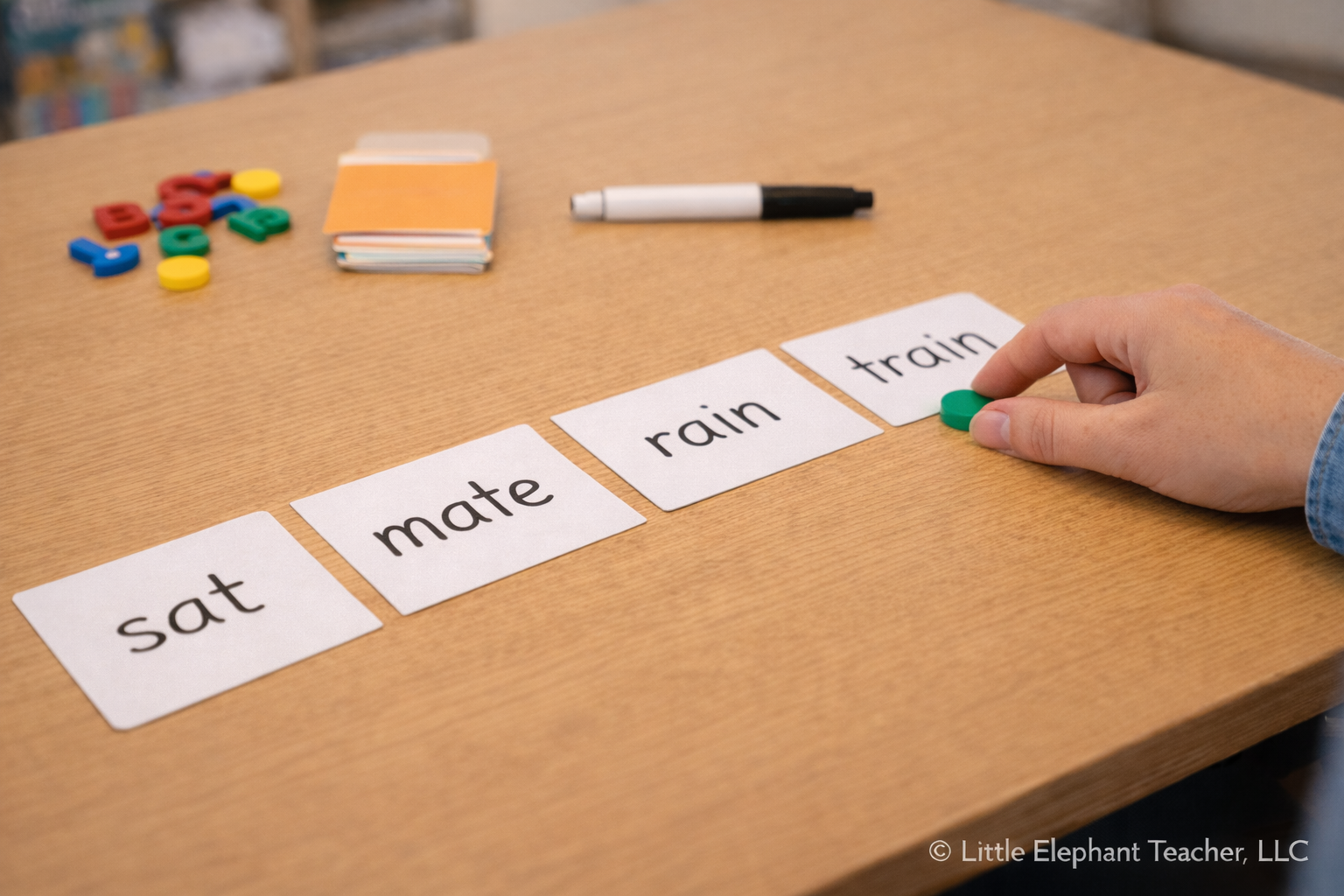
Phonics instruction should follow a clear progression from simple patterns to more complex ones.
Why These Phonics Pitfalls Happen
Most phonics instructional mistakes happen because:
• Teachers receive limited training on interpreting phonics errors
• Curriculum pacing prioritizes coverage over mastery
• Assessment data is not always connected to instructional decisions
These pitfalls are not about doing less.
They are about knowing what to look for—and how to respond.
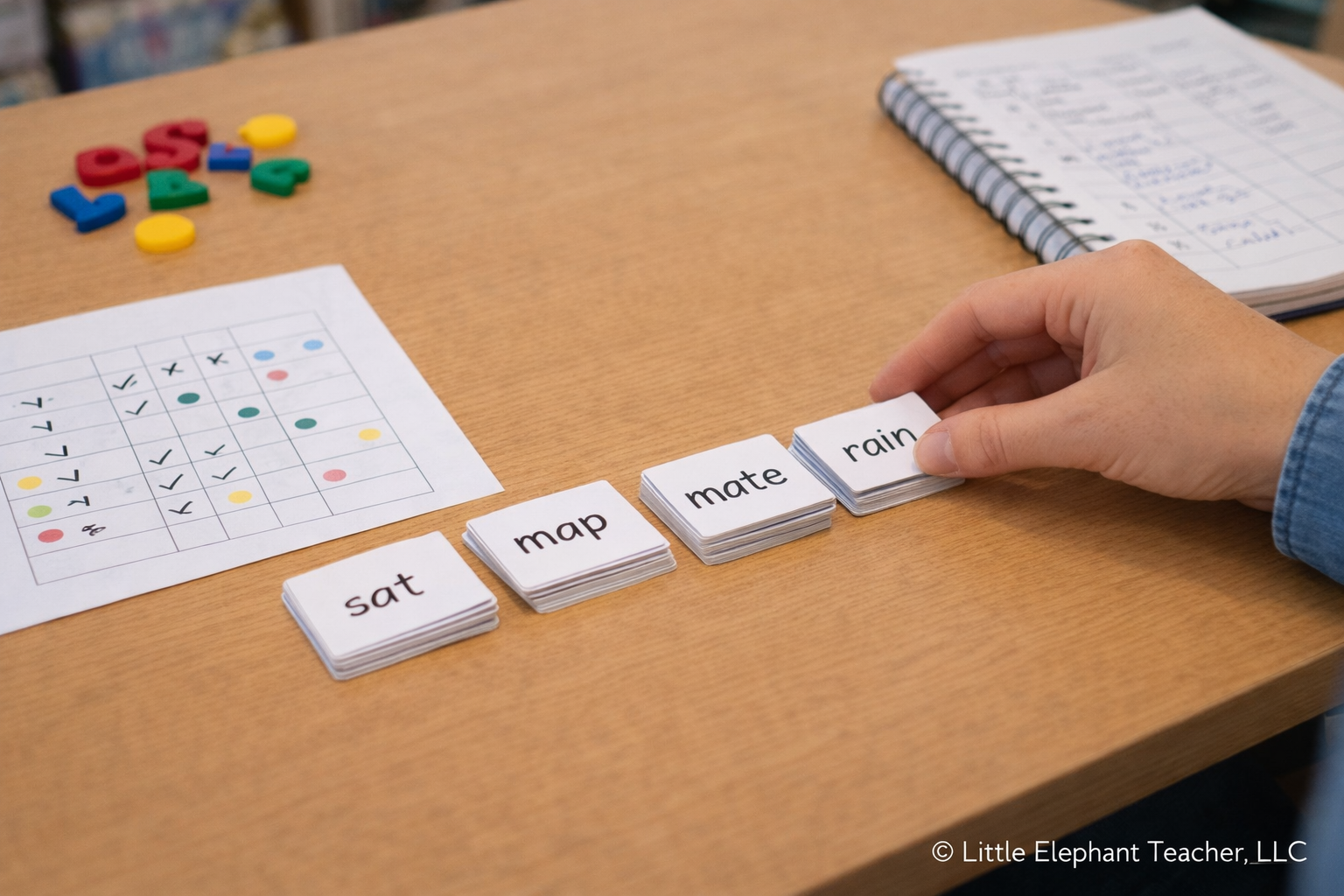
Phonics assessment data helps teachers identify the next instructional step instead of guessing what students need.
Final Takeaway
Most common phonics mistakes teachers make aren’t about effort.
They’re about information.
When assessment drives instruction:
• Overprompting decreases
• Instruction slows down just enough to stick
• Confidence increases for both teachers and students
Clear data leads to clearer instructional decisions.
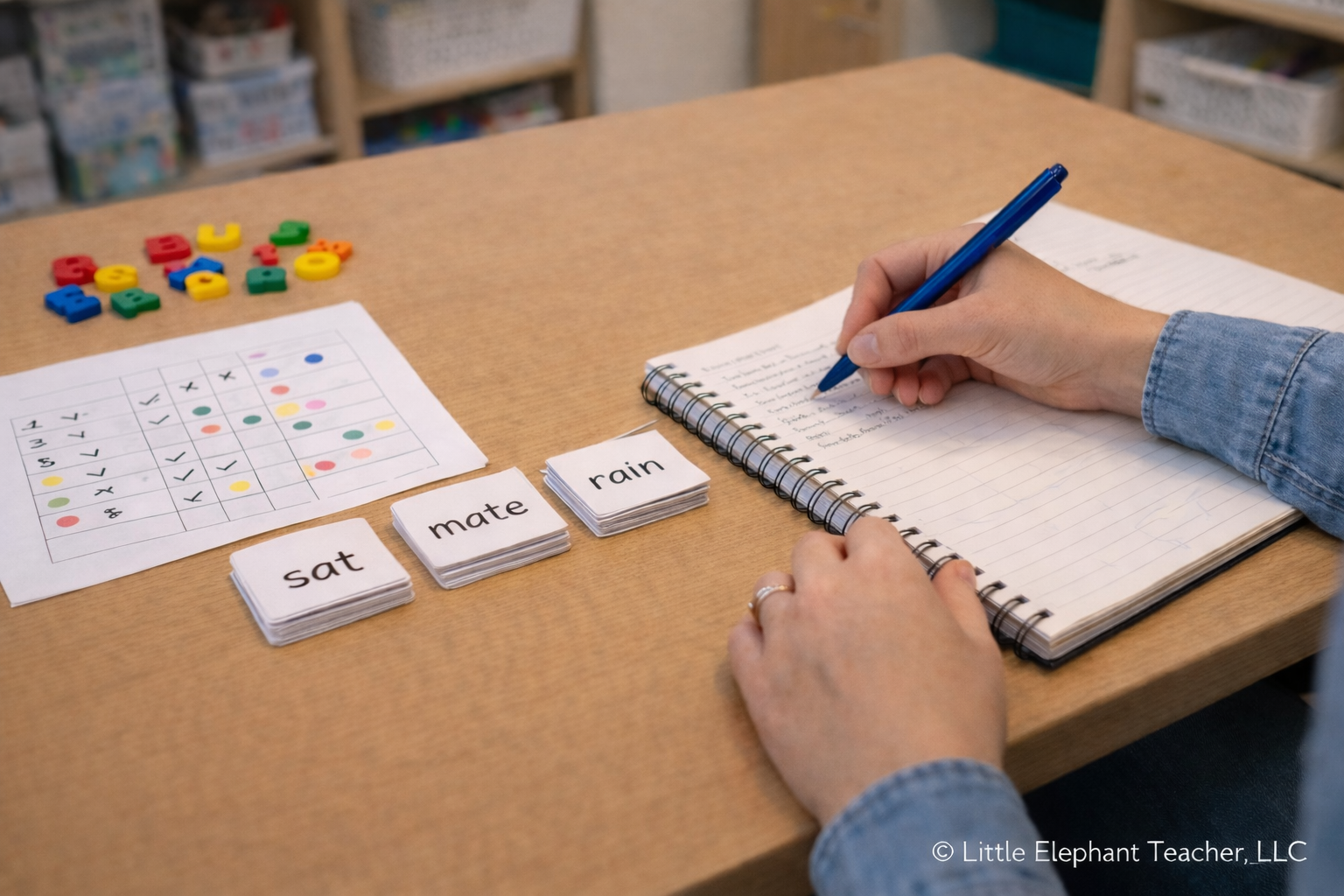
Phonics assessment data helps teachers identify the next instructional step instead of guessing what students need.
Ready to Avoid These Phonics Pitfalls?
If you want to stop guessing and start making confident instructional decisions, the most powerful shift is learning how to interpret phonics errors and let assessment guide instruction.
The Phonics Assessment Course helps teachers:
• Understand what phonics data actually means
• Identify instructional starting points
• Avoid common phonics pitfalls before they stall progress
This isn’t about scripts or adding more work.
It’s about clarity.

Frequently Asked Questions
What are the most common phonics mistakes teachers make?
Overprompting, rushing silent e instruction, memorizing sight words, and starting instruction too far ahead of students’ skills.
How do I know if I’m overprompting?
If students rely on you to tell sounds or cannot explain how they decoded a word, prompting may be interfering.
When should silent e be taught?
After short vowel patterns are secure and students can explain why the vowel changes.
Why doesn’t memorizing sight words work long term?
Because memorization bypasses orthographic mapping, making it difficult for students to transfer patterns to new words.

About the Author
Andrea Russman is the creator of Little Elephant Teacher® and a curriculum developer specializing in Science of Reading–aligned phonics instruction and assessment. She designs structured literacy resources that help teachers connect phonics assessment data to clear instructional decisions so students can build strong decoding skills. Andrea’s work focuses on explicit phonics instruction, phoneme–grapheme mapping, and systematic phonics progression to support struggling readers and intervention teachers.
Through her resources, courses, and classroom materials, she helps educators move beyond guessing and confidently teach the skills that actually move reading forward.